


Travel and stay in Cambodia
From the temples of Angkor to the floating villages of Tonlé Sap
Feel like discovering one of the most fascinating kingdoms in Southeast Asia, amid the remains of a thousand-year-old civilization, lush jungle, life on the water and the hospitality of a resilient people?
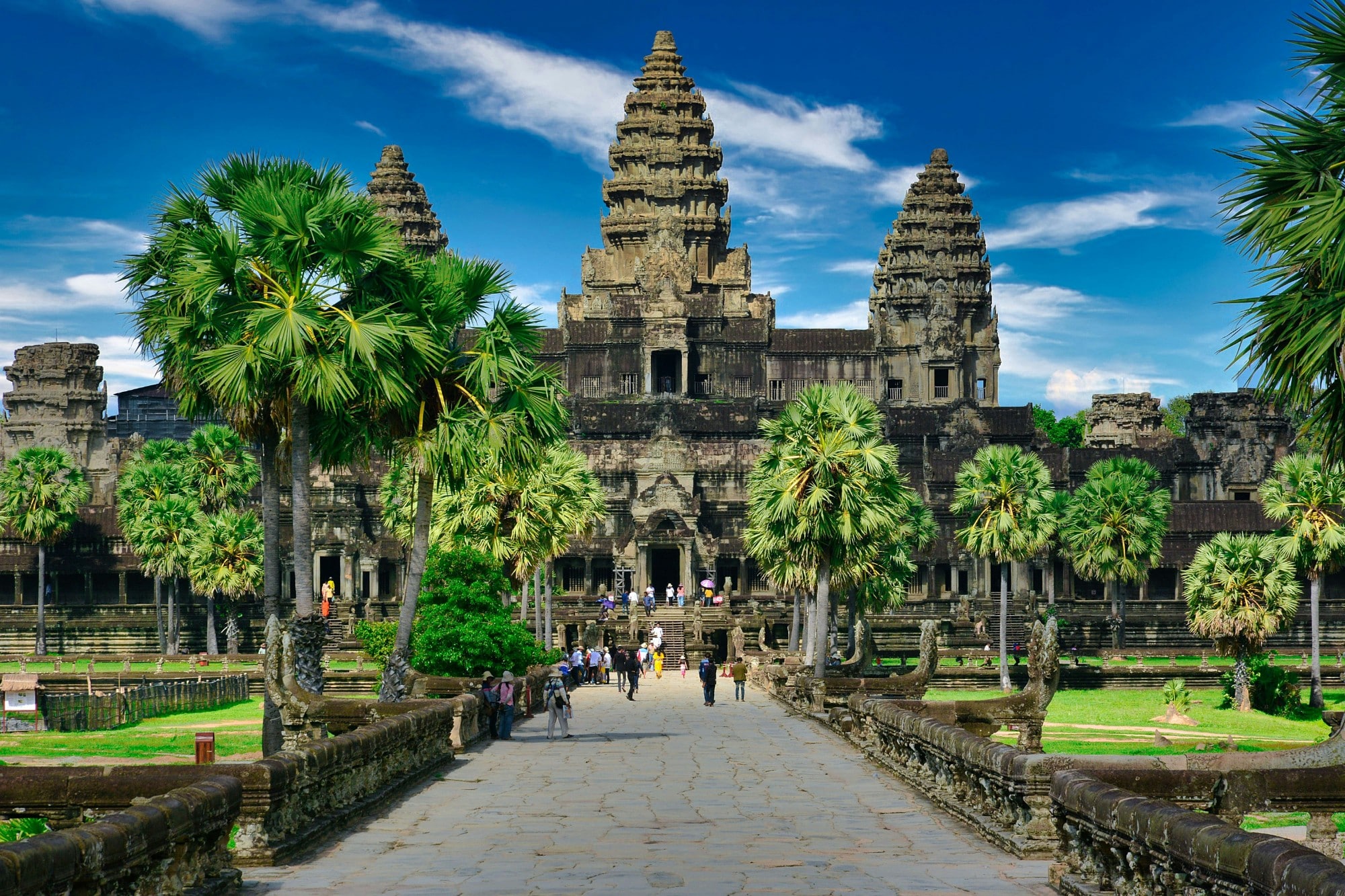
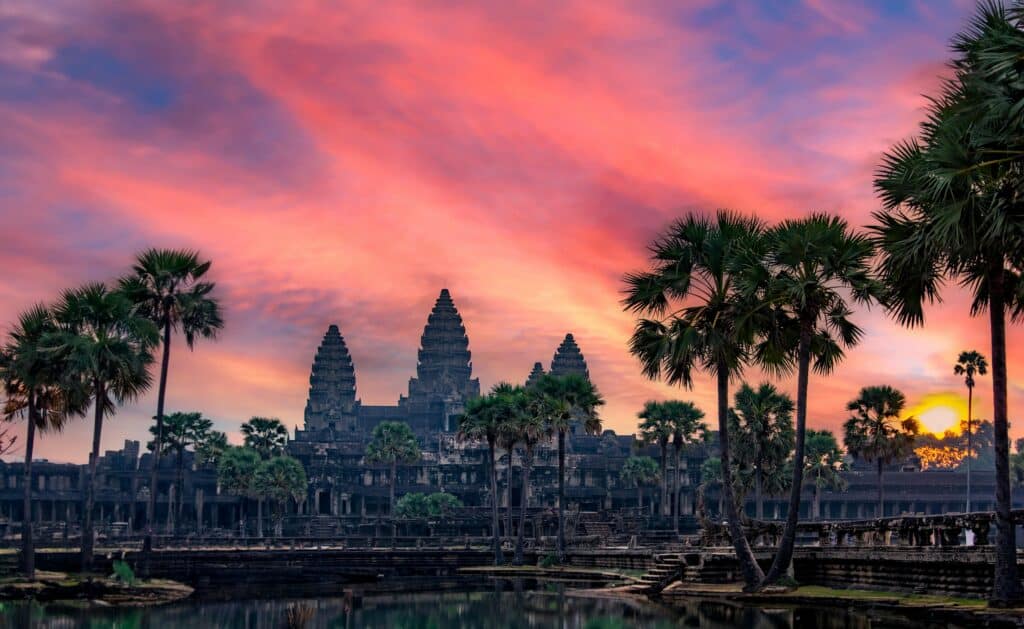
Cambodia, nicknamed the Kingdom of Wonders, offers incomparable cultural and human richness. Its absolute jewel, Angkor Wat — the largest religious monument in the world — dominates the Siem Reap plain with breathtaking majesty. Around this Khmer masterpiece are hundreds of other temples swallowed by the jungle: the mysterious Ta Prohm with its gigantic tree roots, the smiling Bayon with its stone faces, and the finely carved bas-reliefs of Banteay Srei.
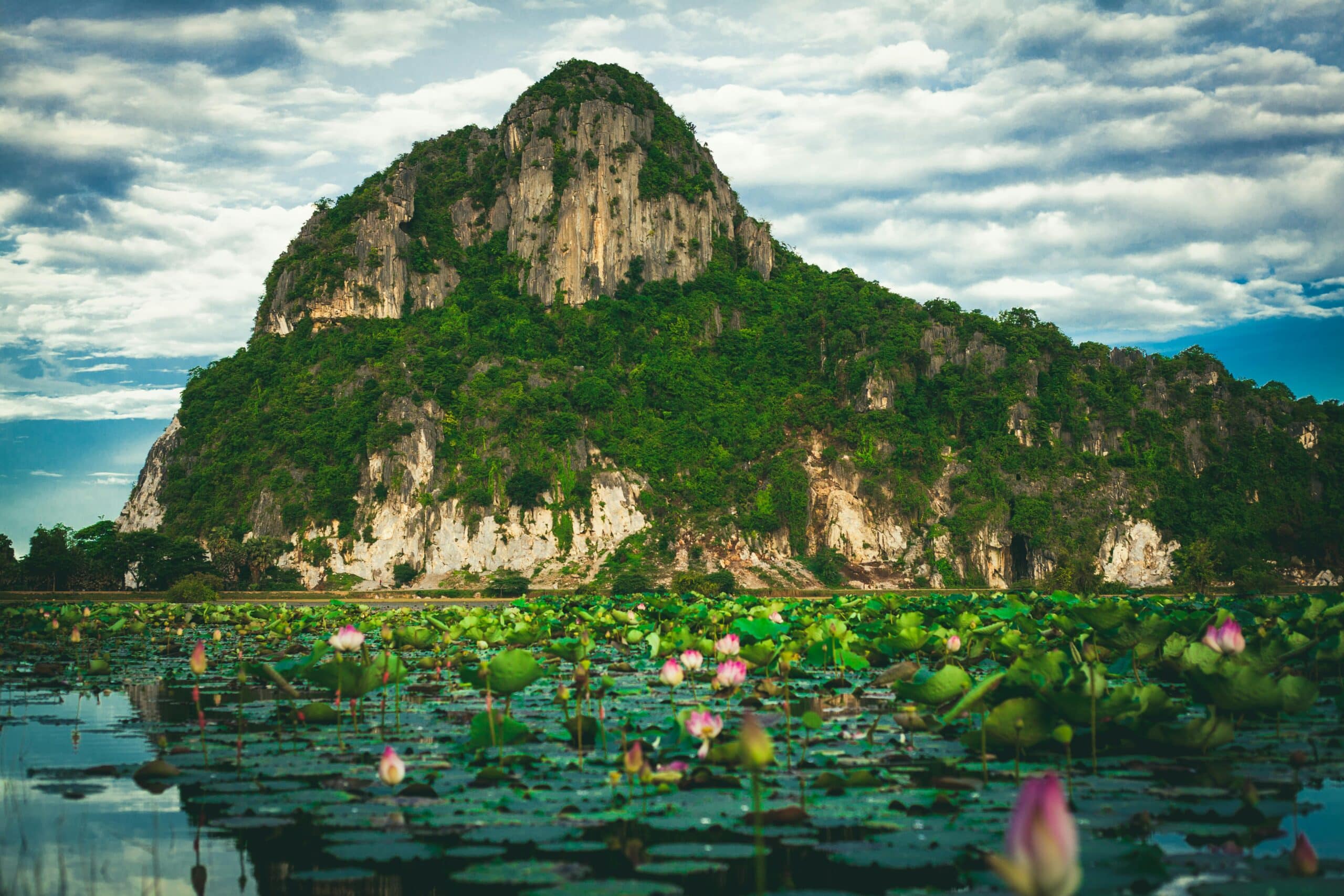
Beyond the temples, Cambodia holds many other discoveries: the vibrant capital Phnom Penh and its Royal Palace with golden roofs, Tonlé Sap Lake and its spectacular floating villages, the peaceful waters of Kampot, the unspoiled beaches of Koh Rong and dazzling green rice fields stretching as far as the eye can see. The ideal season runs from November to March, during the cool, dry season, with cloudless skies and pleasant temperatures.
Voyages Flammang supports you in designing a tailor-made trip to Cambodia, from tours combining temples and Khmer history to relaxing stays on the coast, fully adapted to your pace and your wishes.
Why go to Cambodia?
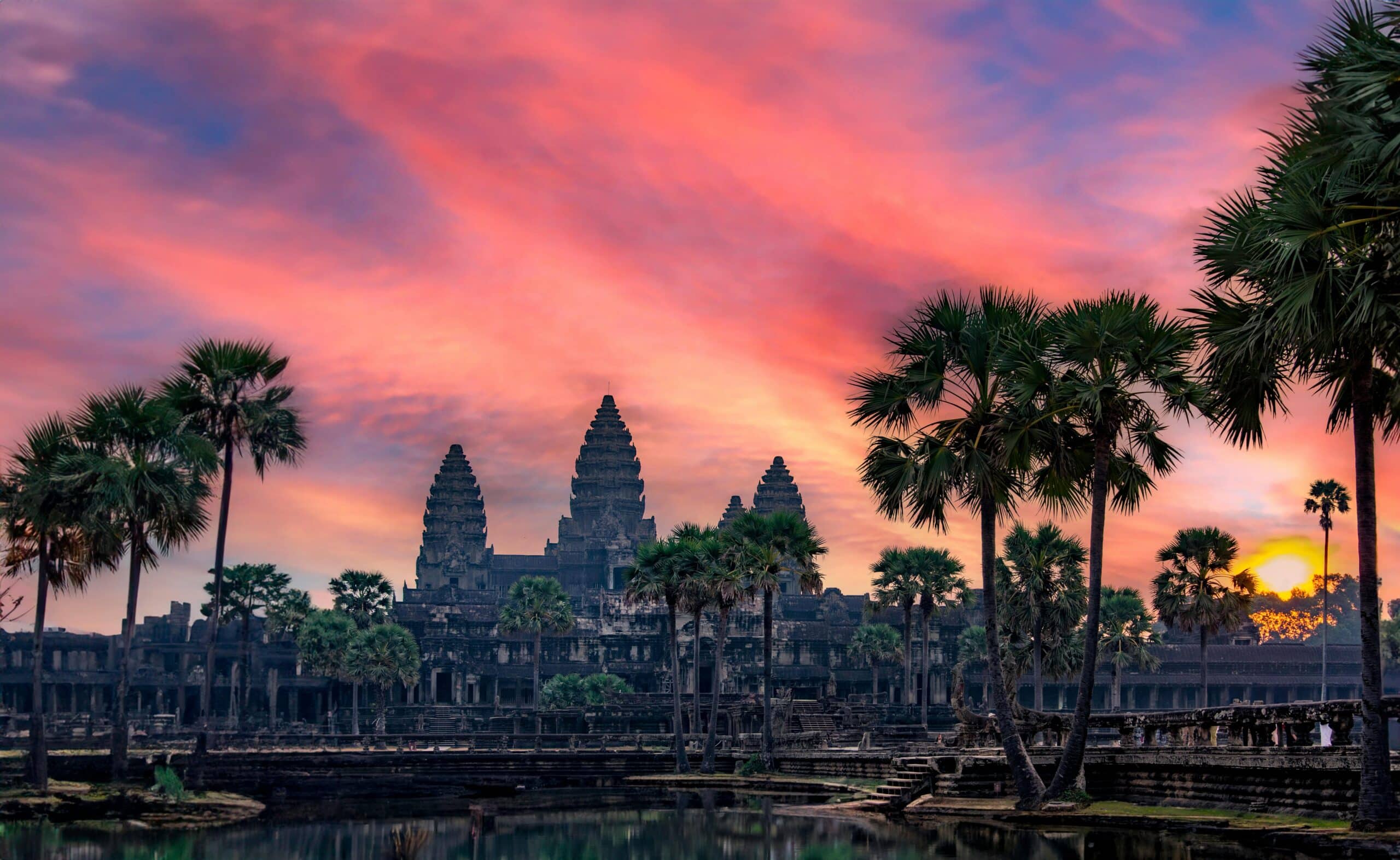
Angkor Wat, the 8th wonder of the world, jungle temples, a thousand-year-old Buddhist culture, floating villages on Tonlé Sap and Khmer gastronomy: Cambodia is an exceptional destination—moving and authentic—within easy flying distance from Luxembourg.
Discover our best offers for your trip to Cambodia
Ready to explore the temples of Angkor and the secrets of the Kingdom of Wonders?
We have selected for you our most popular tours and stays in Cambodia, designed to meet every desire: a complete cultural tour between Angkor and Phnom Penh, a Cambodia–Vietnam combination, a family discovery trip or a romantic getaway.
Whether you are looking for an immersive tour among temples and villages, a memorable honeymoon, or a family discovery of Khmer culture, each stay can be fully customized to your dates, your pace, and your budget.
Choose your package, and we will create for you a tailor-made trip to Cambodia, turnkey.
€6,595
price per person
Cambodia & Vietnam: Zannier Collection
- Overnight stays in charming establishments
- Discovering the temples of Angkor
- Cambodian and Vietnamese gastronomic experiences
€3,150
price per person
Cambodia Emotion
- In-depth discovery of Cambodia
- Angkor site listed as a UNESCO World Heritage Site
- Boat excursion on Tonlé Sap Lake
€4,000
price per person
Khmer Love at First Sight
- Trip designed for a honeymoon in Cambodia
- Discover the legendary temples of Angkor
- An authentic stopover in the Battambang countryside
When to go to Cambodia?
Cambodia enjoys a tropical climate with two distinct seasons — the dry season and the monsoon — which strongly shape the travel experience, particularly access to the temples and the condition of the tracks.
November to March – The ideal season
This is the cool, dry season, with pleasant temperatures (25–32°C), clear skies, and passable tracks. November and December offer perfect temperatures for visiting Angkor. January and February mark the peak tourist season. March becomes hotter but remains very pleasant.
June to October – The rainy season
The monsoon sets in: heavy rains (often in the afternoon), roads and tracks sometimes impassable, and many sites partly flooded. The Tonlé Sap is at its highest level. The upside: the temples are almost deserted and the vegetation is a striking green. Prices drop significantly.
Our recommendation
Opt for November to February for perfect weather and the best access to sites. March and October offer a good compromise between crowds and conditions. Avoid July–August if your priority is visiting the temples.
Siem Reap / Angkor
| Jan | Feb | March | April | Mai | June | July | Aug | Sept | Oct | Nov | Dec | |
|---|---|---|---|---|---|---|---|---|---|---|---|---|
| Our opinion | ||||||||||||
| Season | ||||||||||||
| Tourist peak | ||||||||||||
| T° max | 29°C | 31°C | 34°C | 35°C | 34°C | 33°C | 32°C | 32°C | 31°C | 30°C | 28°C | 27°C |
| Rainy days | 2 d | 3 d | 5 d | 10 d | 14 d | 17 d | 19 d | 20 d | 20 d | 17 d | 6 d | 2 d |
| Hiking |
Where to go in Cambodia? Must-see sites and destinations
Angkor Wat & Siem Reap – the heart of the Khmer temples
Siem Reap is the gateway to the most spectacular archaeological site in Southeast Asia. The Angkor complex (400 km², a UNESCO World Heritage Site) includes more than 200 temples, including the majestic Angkor Wat, the mysterious Ta Prohm overrun by tree roots, and the smiling Bayon. The city itself, with its night market, lively Pub Street, and restaurants serving Khmer cuisine, is an ideal base for several days of exploration.
Ideal for:
- sunrise over Angkor Wat from the reflecting pool
- Ta Prohm temple and its centuries-old strangler figs
- visiting the Siem Reap museum and the night market
Not to be missed:
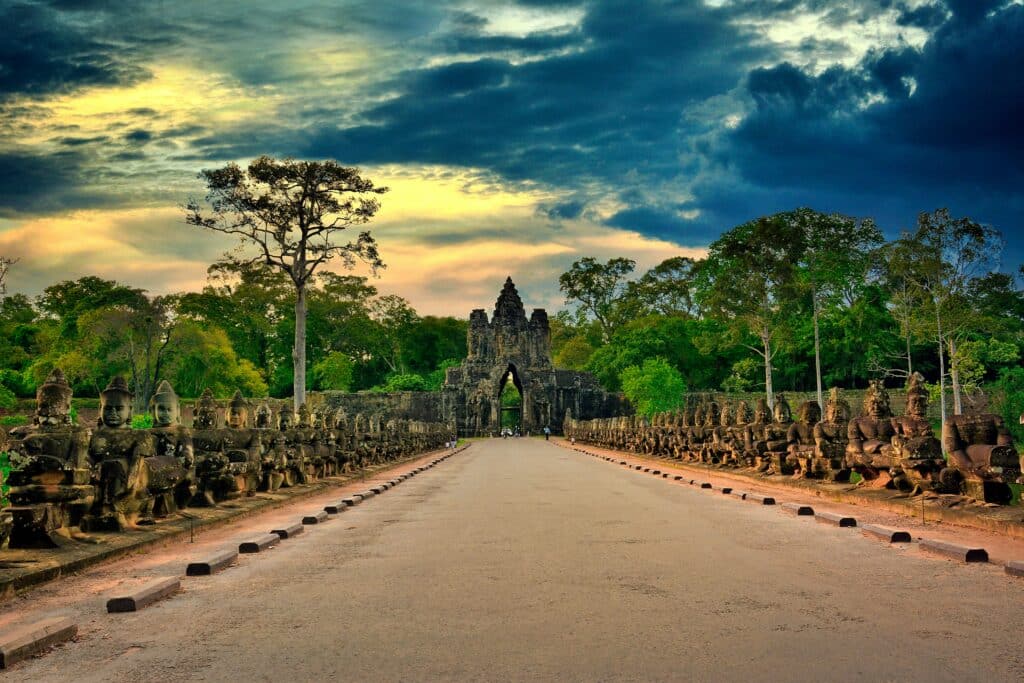
- Bayon and its 216 smiling stone faces
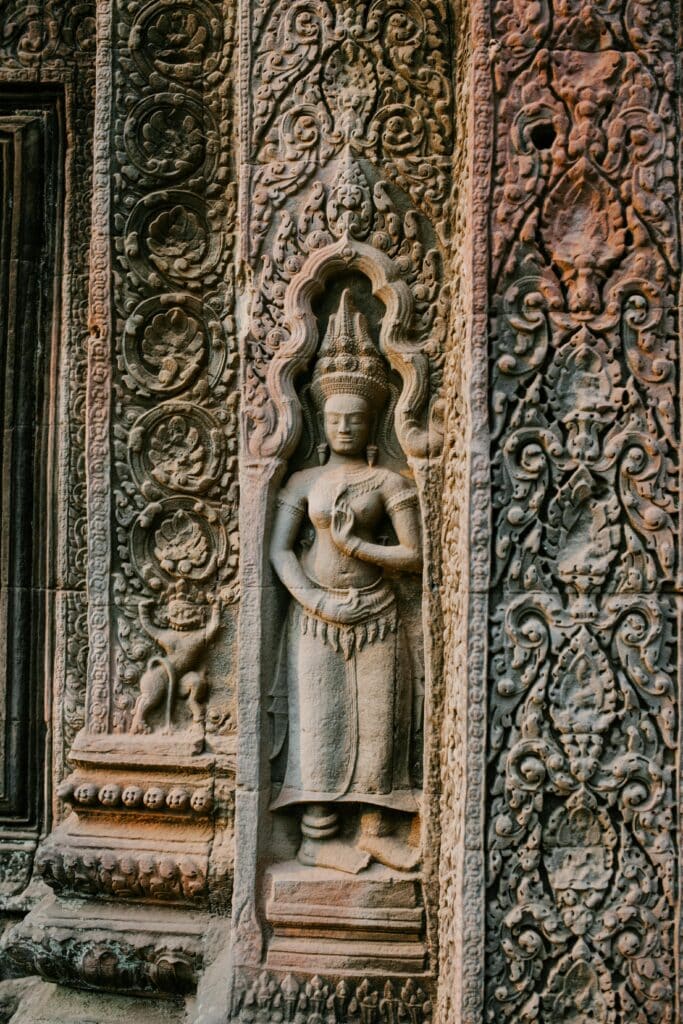
- Banteay Srei – the pink sandstone temple
- boat trip on the Tonlé Sap
Phnom Penh – the capital between history and modernity
Phnom Penh is an endearing capital in the midst of a revival, blending French colonial architecture, gilded Buddhist pagodas, and contemporary Asian bustle. The Royal Palace and the Silver Pagoda are dazzling; the National Museum houses the finest collection of Khmer art in the world. The memorials of Choeung Ek and the genocide museum Tuol Sleng (S-21) recall the painful Khmer Rouge past — an essential visit to understand Cambodia today.
Perfect for:
- Royal Palace and Silver Pagoda
- National Museum and Khmer art collection
- Choeung Ek memorials and the S-21 museum
Must-do experiences:
- the Russian Market and the Central Market
- sunset cruise on the Mekong
- bike ride through the colonial quarters
Tonlé Sap – the great lake and its floating villages
The Tonlé Sap is Southeast Asia’s largest lake and Cambodia’s life-giving heart. Every year, the Mekong floods reverse the flow of the Tonlé Sap River and increase the lake’s surface area sixfold. On its waters and shores, thousands of families live in entirely floating villages: homes, school, pagoda, grocery store — everything floats. A boat trip from Siem Reap to visit Kompong Khleang or Chong Khneas is one of the most memorable experiences of the journey.
Ideal for:
- boat trip on the lake
- meeting the floating communities
- birdwatching at sunset
Not to be missed:
- sunset on the lake from the boat
- Kompong Khleang — a less touristy village
- traditional fishing with cast nets
Kampot & Kep – the gentle pace of southern Cambodia
In the south of Cambodia, Kampot is a sleepy colonial town on the riverbank where time seems to stand still. Its colorful houses, riverside cafés, and Kampot pepper plantations (PGI, considered one of the best peppers in the world) make it a charming, much-loved stop. Just 25 km away, the coastal town of Kep, a former colonial seaside resort, is famous for its grilled crab with pepper enjoyed by the sea — an unforgettable gastronomic experience.
For travelers looking for:
- authenticity and a gentle way of life in Kampot
- gastronomy – crab and Kampot pepper
- kayaking on the Kampot River
To discover:
- visit to a pepper plantation
- Phnom Chhnork Cave (Hindu temple)
- sunset from Bokor Mountain
Koh Rong & Sihanoukville – Cambodia’s beaches
Off the coast of Sihanoukville, the island of Koh Rong offers what few destinations can still promise: pristine white-sand beaches and turquoise waters, accessible only by boat, with minimalist infrastructure. Koh Rong Samloem, the neighboring island, is even more unspoiled. The phenomenon of nocturnal bioluminescence (glowing plankton in the sea at night) is one of the most breathtaking natural spectacles Cambodia offers travelers.
For travelers looking for:
- pristine beaches far from the crowds
- snorkeling on coral reefs
- night-time bioluminescence in the sea
To discover:
- Koh Rong Samloem — wilder and more unspoiled
- a walk in the island’s jungle
- a night in a bungalow by the beach
Which trip to Cambodia is right for you?
Cambodia lends itself to every travel style: an immersive cultural tour for lovers of Khmer history, a family adventure between temples and life on the water, a romantic getaway between Angkor and Kampot, or a road trip with friends from Phnom Penh to the beaches of Koh Rong.

Family trip – temples and Cambodian discoveries
Cambodia is an exciting destination for families: the temples of Angkor fascinate young and old, the elephants of Mondulkiri amaze, and the kindness of the Khmer people creates a reassuring setting. Discovering the floating villages of Tonlé Sap by boat is an unforgettable experience for children. Choose a well-paced family itinerary with a variety of activities.
You will especially enjoy:
- Angkor temples suitable for all ages
- meeting elephants in Mondulkiri
- a boat excursion on Tonlé Sap

Couple’s trip – Khmer romance & Cambodian serenity
Cambodia offers an exceptional setting for a romantic trip: sunrise over Angkor Wat in an almost unreal atmosphere, a candlelit dinner at the best restaurants in Siem Reap, a sunset cruise on the Mekong in Phnom Penh, a peaceful retreat in Kampot in a bungalow by the river, and nights in an eco-village in Koh Rong Samloem under the stars and bioluminescent plankton.
To experience as a duo:
- a private sunrise over Angkor Wat
- a fine-dining dinner in Siem Reap
- a romantic retreat in Kampot by the river

Trip with friends – Khmer adventure & Koh Rong beaches
With friends, Cambodia is best experienced to the fullest: exploring the temples of Angkor by bike or tuk-tuk, lively nights on Siem Reap’s Pub Street, a road trip to Phnom Penh, a culinary stop in Kampot around crab and pepper, and the final days relaxing on the pristine beaches of Koh Rong. The adventure of local transport (bus, boat, tuk-tuk) and the generosity of the Khmer people make every day unforgettable.
Not to be missed:
- bike rental to explore Angkor
- Pub Street and Siem Reap night market
- beaches and bioluminescence in Koh Rong
Practical tips for your trip to Cambodia
Angkor Wat is the largest religious monument in the world, covering an area of 402 km². It appears on the Cambodian national flag — a very rare honor worldwide. The Angkor complex was rediscovered by the French explorer Henri Mouhot in 1860, although it was never really “lost” to the local Khmer population, who used it as a Buddhist temple.
A Cambodian e-visa is mandatory for Luxembourg and European nationals. It is easily obtained online at evisa.gov.kh (around USD 30 + USD 6 service fee, valid for 30 days, single entry). A visa on arrival is possible at the airport but more expensive and with queues. Your passport must be valid for at least 6 months after your entry date.
Cambodia officially uses the riel (KHR), but the US dollar (USD) is the de facto currency used everywhere — hotels, restaurants, taxis, shops. Bank cards are accepted in tourist establishments. Cambodia is an affordable destination: expect USD 30–80/day on a mid-range budget (guesthouse accommodation + meals + local transport), more for higher comfort.
Consult your doctor or a tropical vaccination center before departure. Recommended vaccinations include <strong>hepatitis A and B, typhoid, rabies</strong> (for long stays). Antimalarial medication is advised depending on the areas visited (less necessary in Siem Reap and Phnom Penh, more useful in remote regions). Avoid tap water and opt for bottled water. Mosquito protection is essential.
The tuk-tuk is the iconic mode of transport and ideal for visiting the temples of Angkor at your own pace. For long distances (Phnom Penh – Siem Reap), comfortable buses (Giant Ibis, Mekong Express) or quick domestic flights. Bike or scooter rental is popular in Kampot and Koh Rong. The PassApp app (on-demand tuk-tuk) works well in major cities.
The official language is Khmer. English is widely spoken in the tourism sector (hotels, restaurants, guides). The time difference with Luxembourg is +5h in summer (UTC+7) and +6h in winter. Local SIM cards (Smart, Metfone operators) are very cheap (USD 1–2) and offer good 4G coverage in tourist areas.
Cambodia is generally safe for tourists in popular areas. Main precautions: don’t walk alone at night in poorly lit areas, watch out for pickpockets in crowded markets, never leave marked paths in areas that may still be mined (especially outside the Angkor sites). Avoid displaying valuables. Swimming in the sea is generally safe on Koh Rong.
Create your dream trip to Cambodia now
Angkor Wat, Phnom Penh, Tonlé Sap, Kampot and the beaches of Koh Rong are waiting for you.
We design a tailor-made trip to Cambodia for you, fully adapted to your dates, your budget and your desires in the Kingdom of Wonders.
Also discover our other destinations in Asia
Feel like extending the adventure after Cambodia?
Our experts have selected for you the most beautiful destinations in Southeast Asia, ideal to combine with your stay in Cambodia: the temples of Bagan in Myanmar, the beaches of Thailand, the rice terraces of Bali, Halong Bay in Vietnam and the lanterns of Hội An. Let yourself be inspired for your next great Asian adventure.
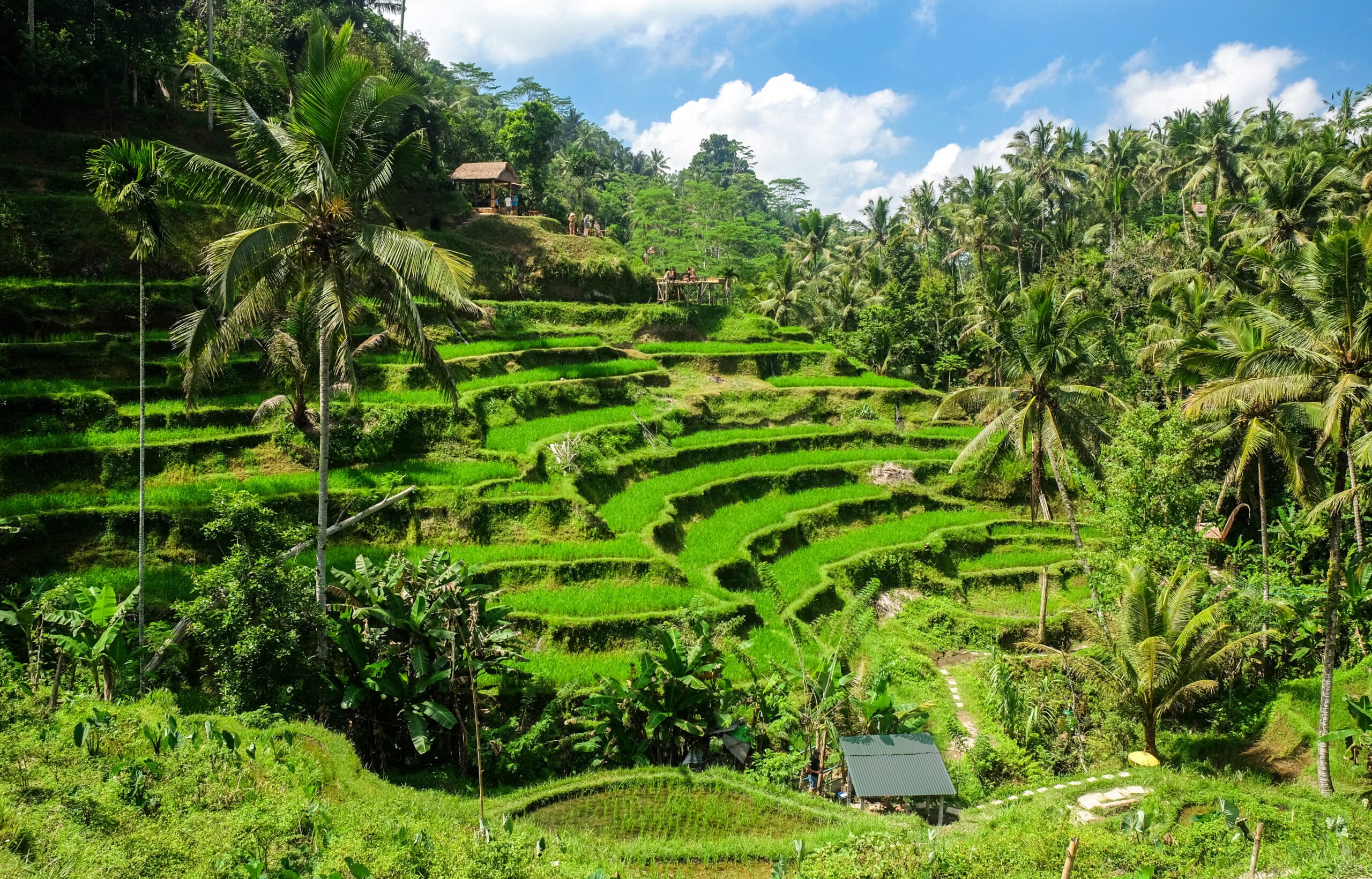
Bali
Between rice paddies, volcanoes and lagoons, serenity becomes an island
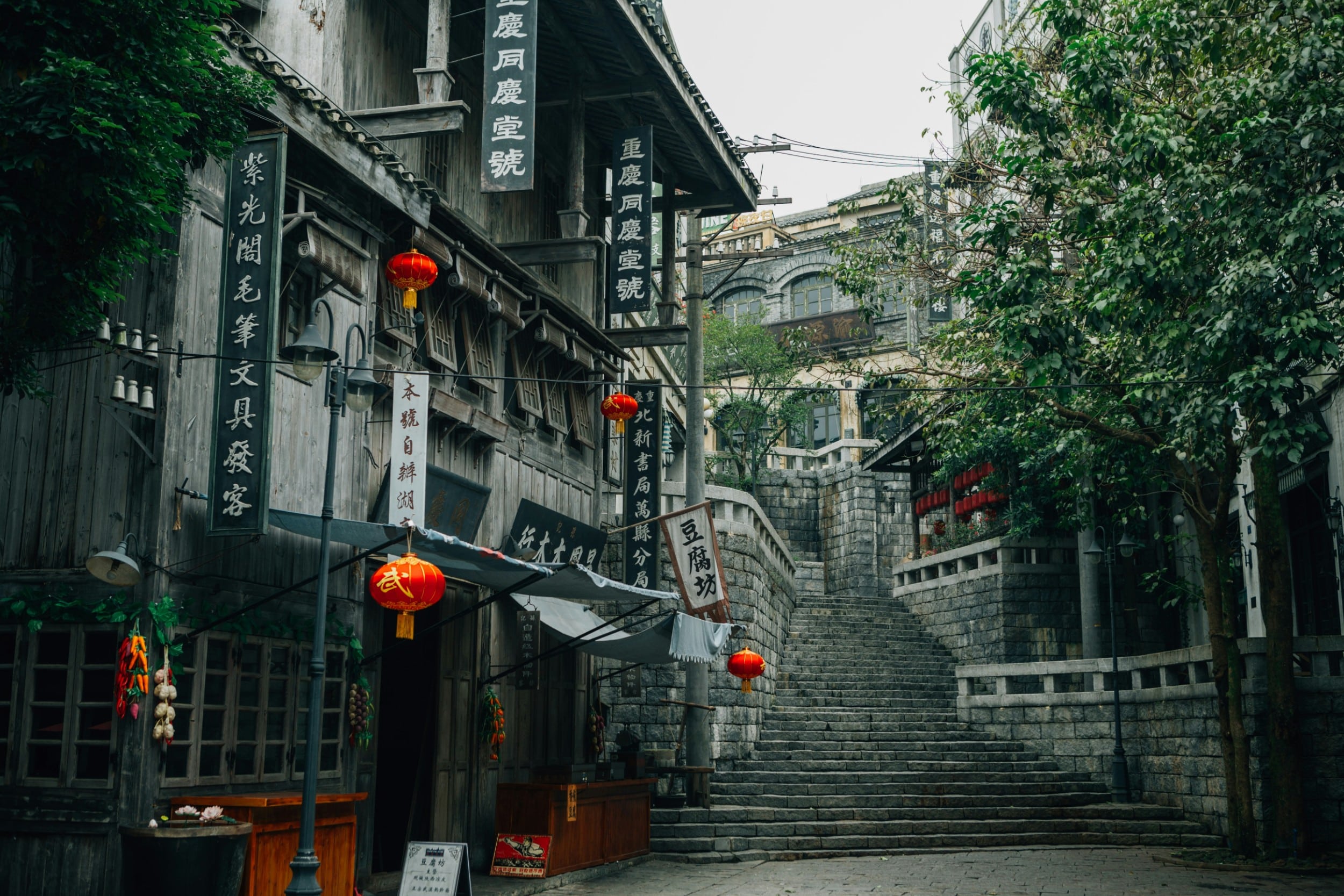
China
From the Great Wall to futuristic skyscrapers
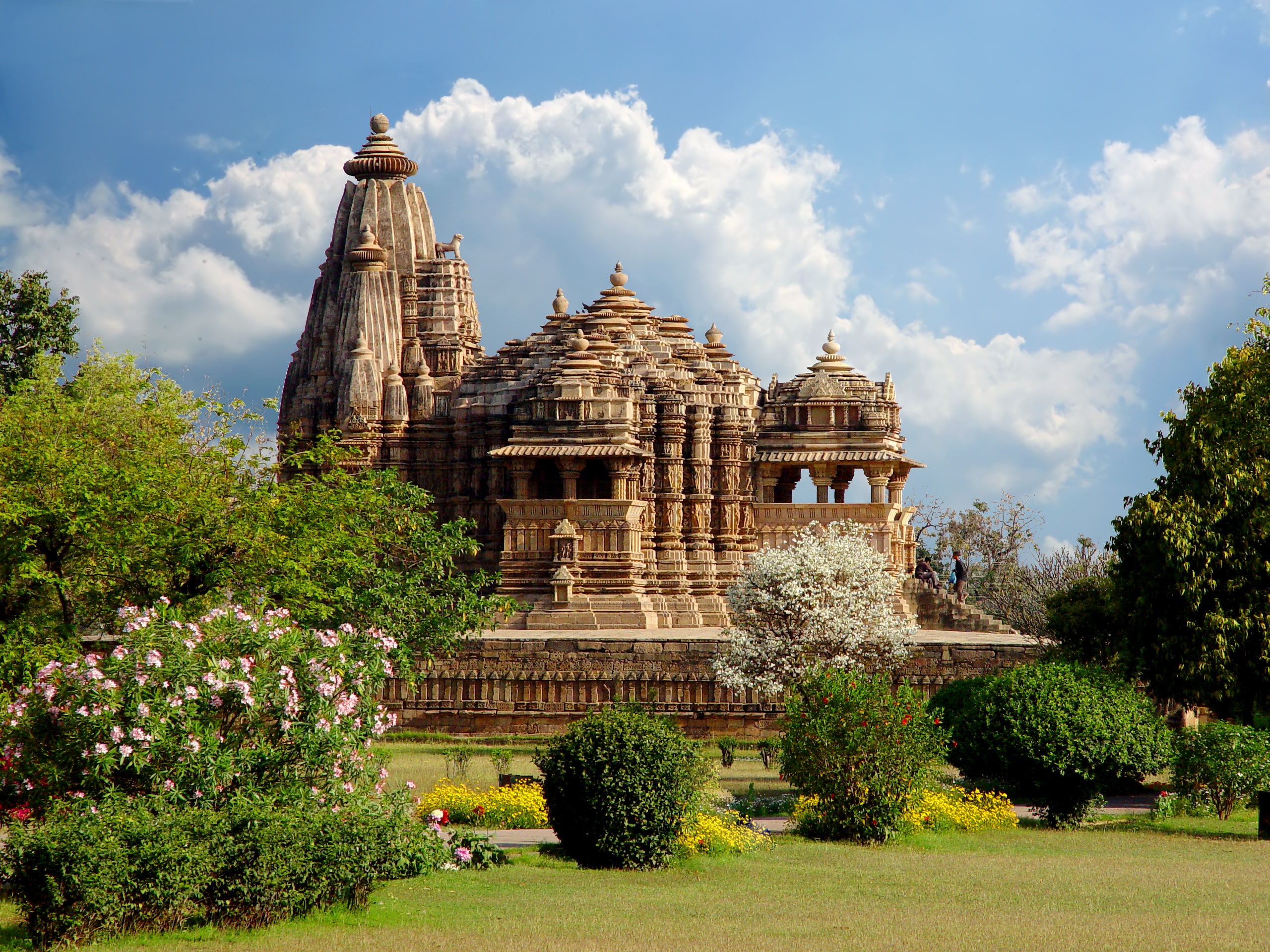
India
A world of colours, scents and spirituality
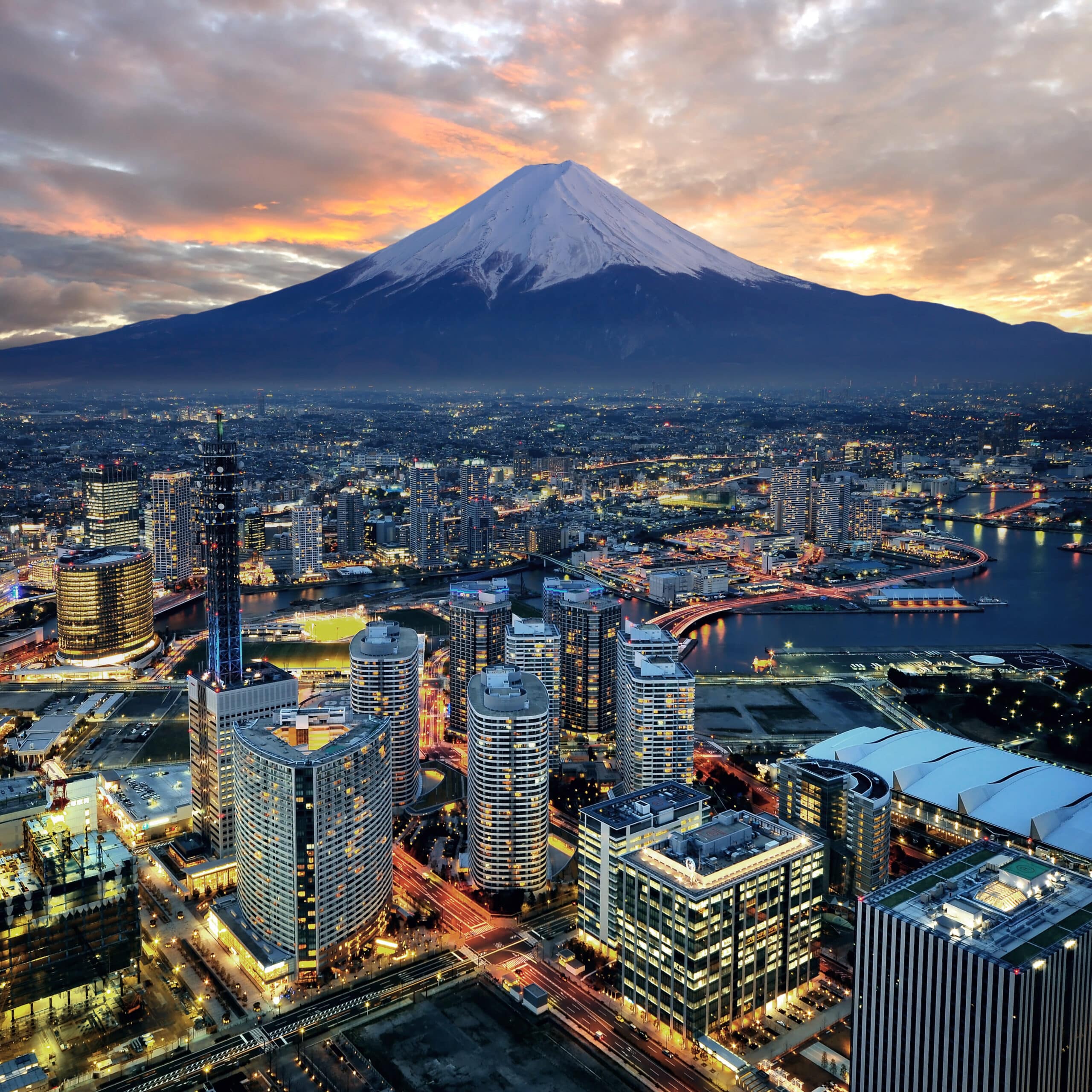
Japan
Experience the harmony between temples and skyscrapers
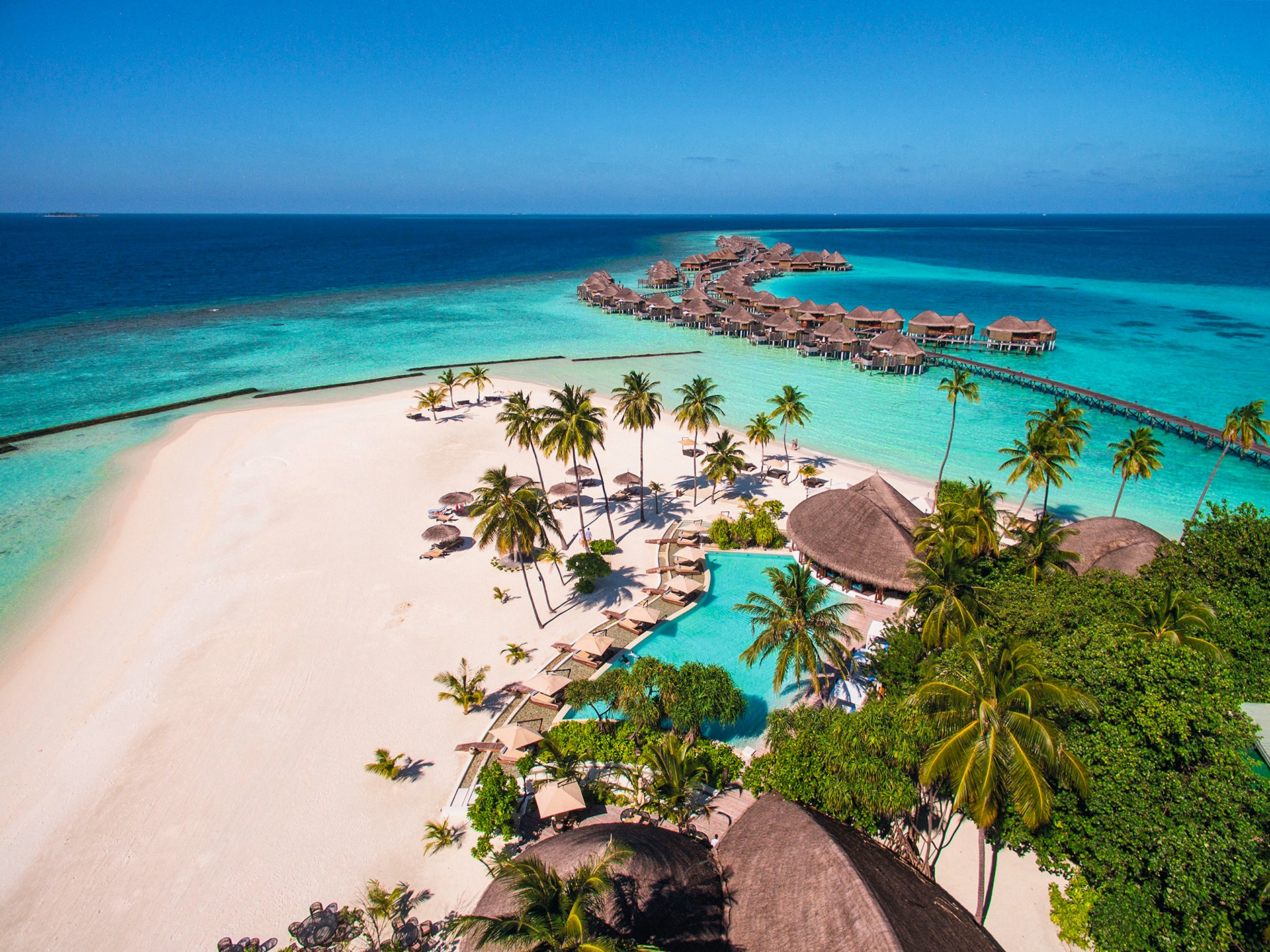
Maldives Islands
A turquoise jewel at the end of the world
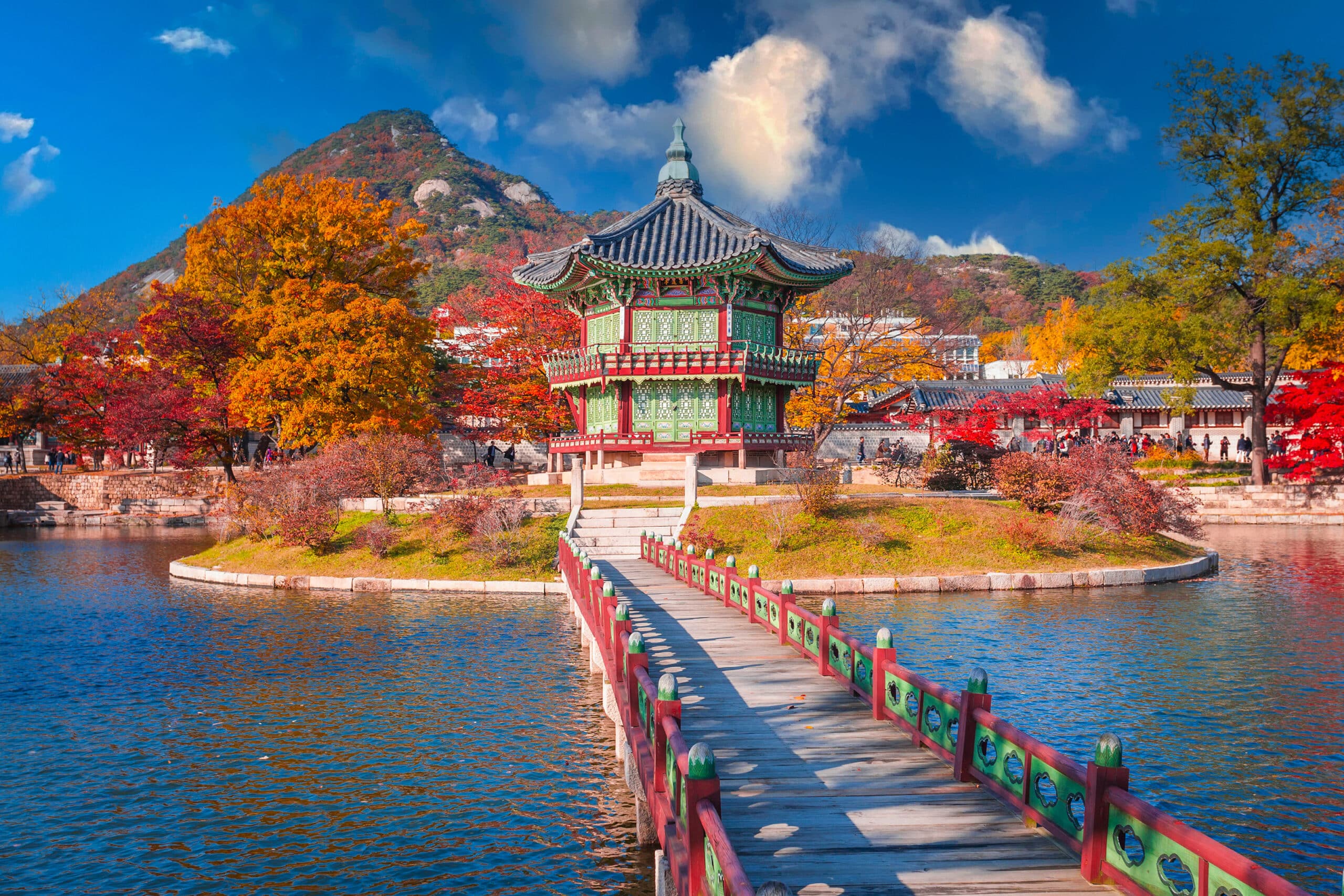
South Korea
Between ancient rituals and urban beats
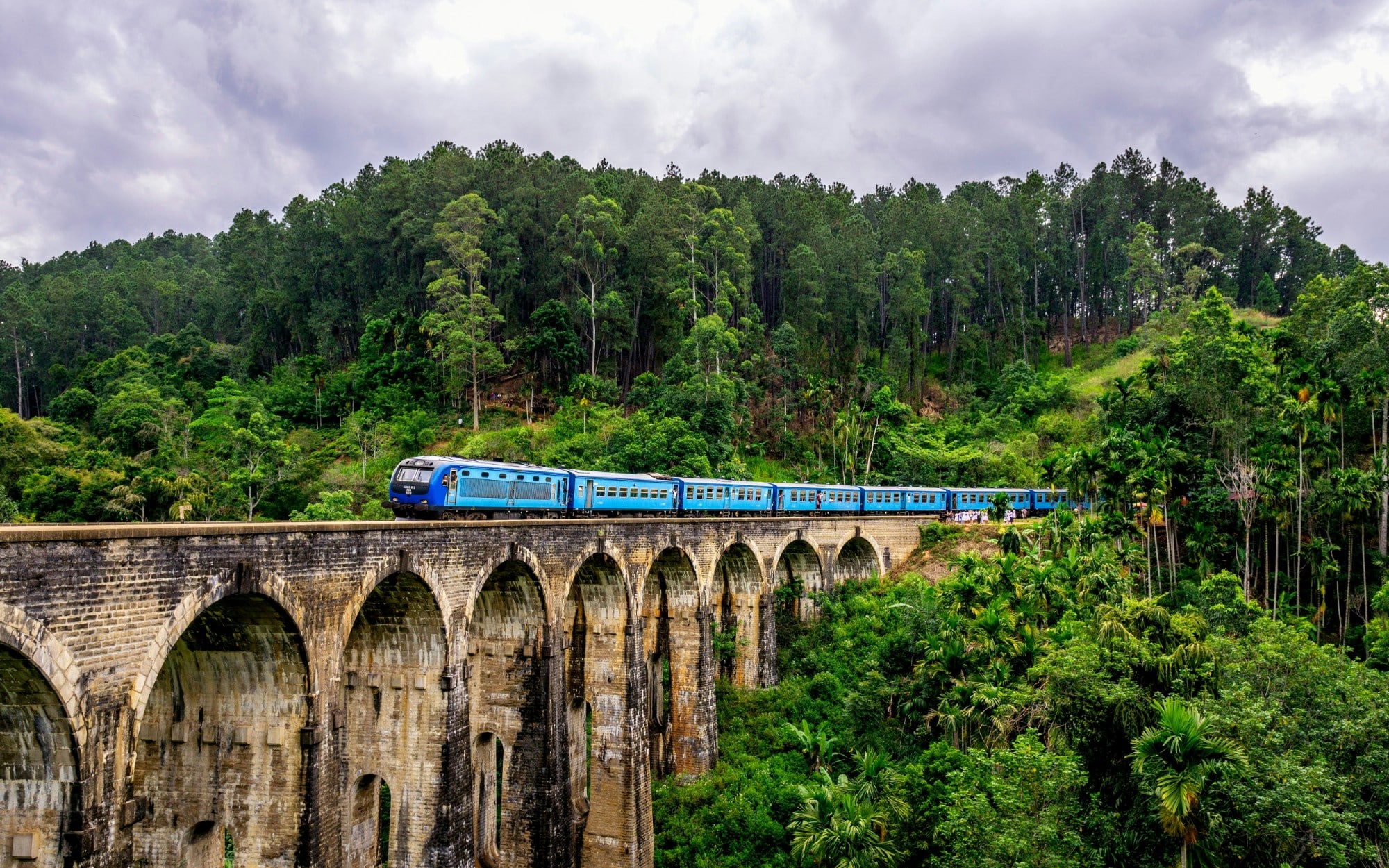
Sri Lanka
A jewel of Asia where nature and spirituality unite
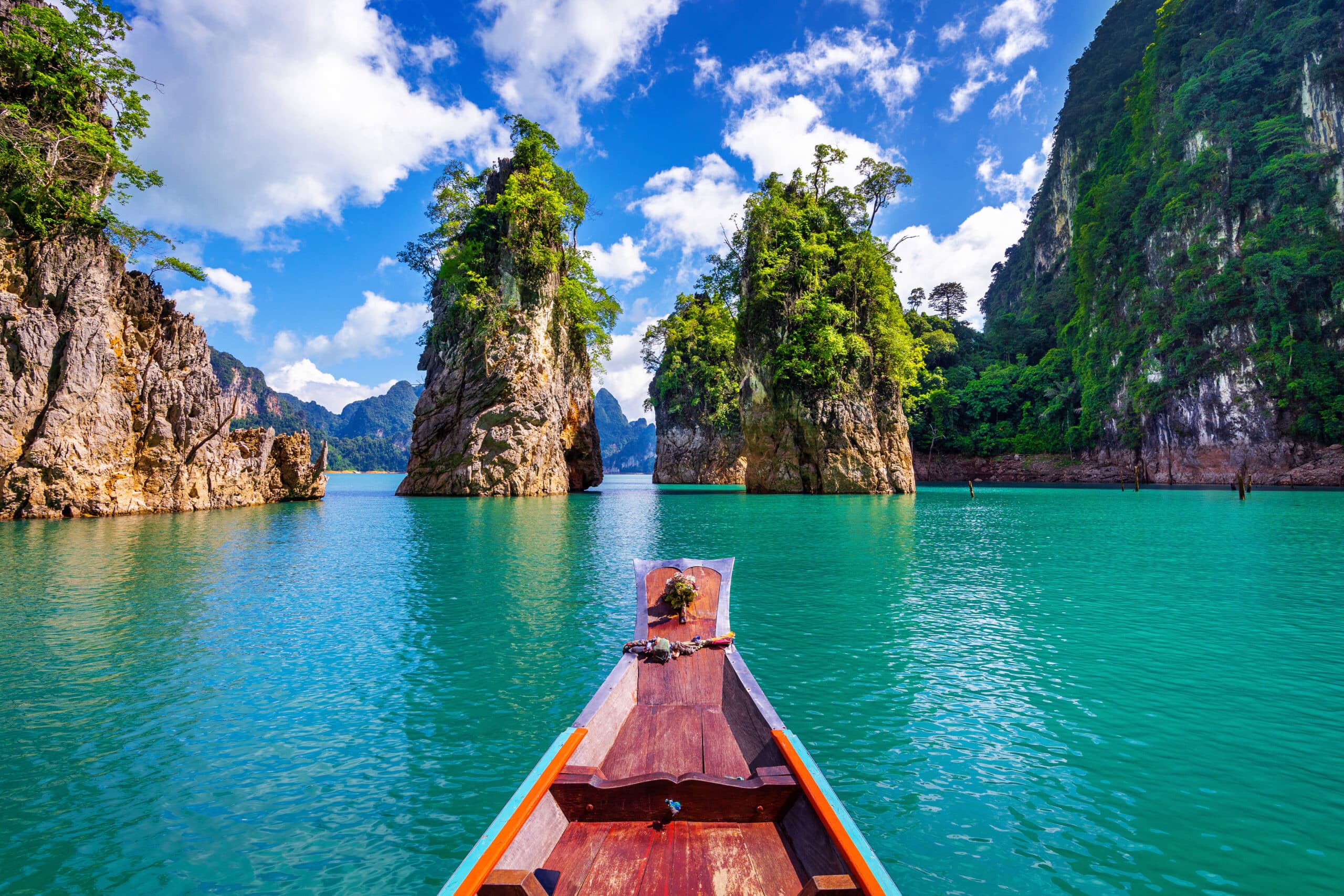
Thailand
Between golden temples and azure lagoons.
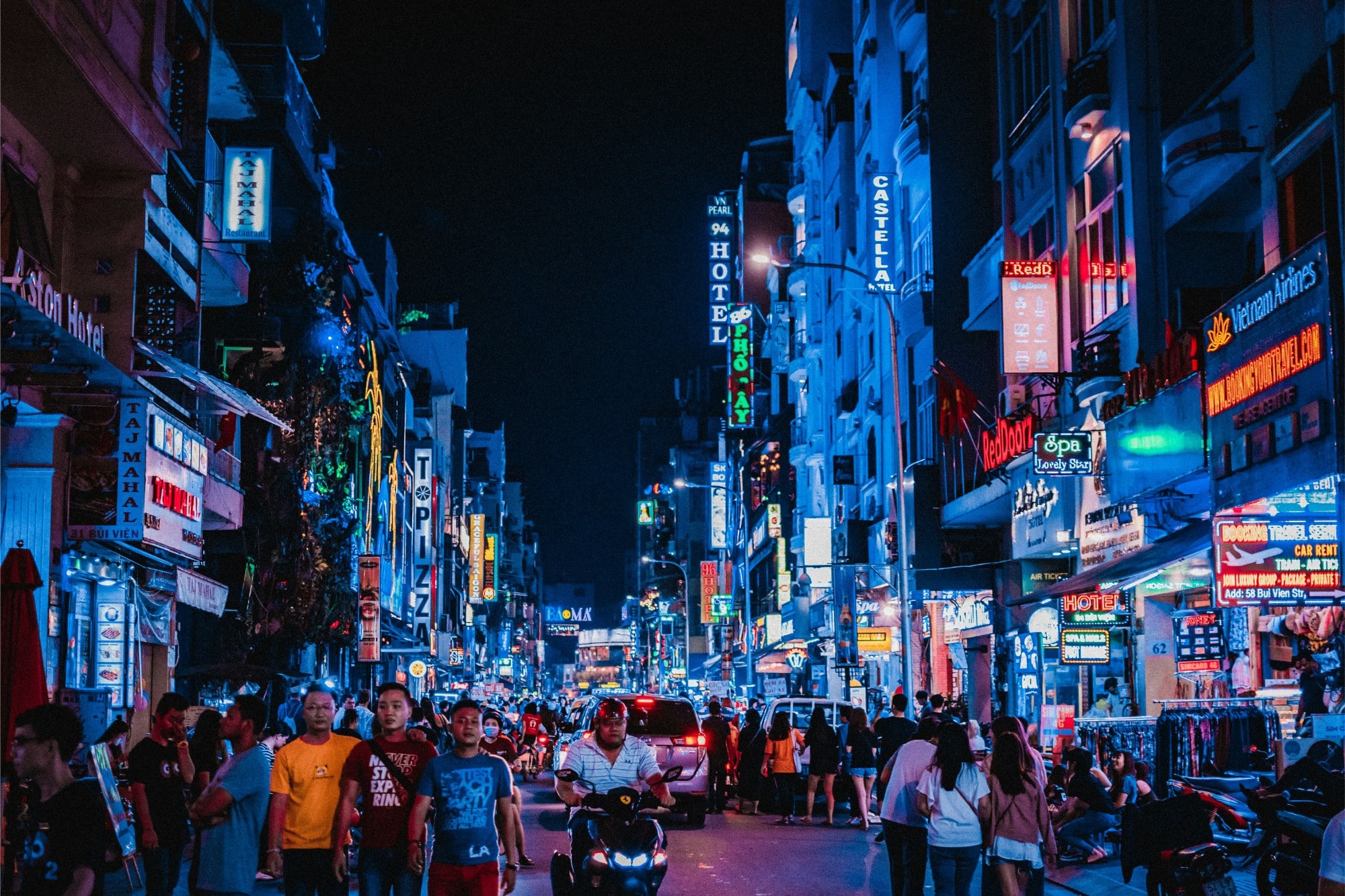
Vietnam
Between rice paddies, bays and mountains
FAQ: everything you need to know before traveling to Cambodia
Start by obtaining your e-visa (evisa.gov.kh, about USD 30, to be requested at least one week in advance). Choose your season: November to March for perfect weather. Plan appropriate vaccinations (hepatitis A/B, typhoid). Book your accommodations in advance during the high season in Siem Reap. Our Flammang advisors prepare a tailor-made itinerary for you with transfers, hotels and local guides.
Allow at least 8–10 days for a trip to Cambodia that includes Angkor (3 days), Phnom Penh (2 days) and some relaxation (Kampot or Koh Rong). 12 to 15 days allow you to explore the country at a relaxed pace and combine it with Vietnam or Thailand. A 3-week stay is ideal for discovering temples, countryside, coast and culture at your own pace.
The best time is the dry season, from November to March, with pleasant temperatures (25–33°C) and little rain. December–January is the high season (peak tourist crowds at Angkor). Avoid July–August (intense monsoon) unless you’re looking for very low prices and fewer people. October and November mark the end of the monsoon and offer good value for money with lush vegetation.
Cambodia is accessible from Luxembourg with 1 to 2 stopovers. Allow 15 to 19 hours of total travel time: flight from Brussels or Luxembourg to Doha, Dubai, Bangkok or Singapore, then a connection to Phnom Penh (PNH) or Siem Reap (SAI). The most common airlines from Europe are Qatar Airways, Emirates, Thai Airways and Singapore Airlines.
Cambodia is generally safe for tourists in the main visited areas. Siem Reap and Phnom Penh are the most touristy and most secure cities. Main precautions: stay alert in crowded markets (pickpockets), don’t walk alone at night in poorly lit areas, and respect the marked-off zones around temples (landmine risk in some remote rural areas).
Yes, Cambodia is very easy to combine with Vietnam (land border or flight, classic route Ho Chi Minh – Phnom Penh – Siem Reap) or Thailand (Bangkok is a major hub with many connections). A 2- to 3-week Cambodia–Vietnam combination is one of the most popular Southeast Asia itineraries. Our Flammang advisors design this type of combined trip regularly.
Cambodia is a Buddhist country and dress is important: cover shoulders and knees to enter temples (sarongs available at the entrance to Angkor). Remove your shoes and hat before entering a pagoda. Avoid touching Cambodians’ heads (an disrespectful gesture). Feet should not point toward Buddha statues. Smiles are universal — the Khmers are among the warmest people in Asia.
Angkor Wat is unanimously described by travelers who have visited it as one of the greatest emotions of their lives. The sunrise over the towers of Angkor Wat reflected in the pool, discovering Ta Prohm overtaken by tree roots, the smiling faces of the Bayon in the morning mist — these images remain etched forever. Yes, Angkor Wat is absolutely worth the trip, and far beyond your expectations.
Cambodia is an affordable destination. Budget around €1,500 to €2,500 per person for 10 all-inclusive days (flights from Luxembourg, 3–4-star accommodations, guided tour, transport). The entrance ticket to the Angkor site costs USD 37 for 1 day, USD 62 for 3 days, USD 72 for 7 days. Meals in tourist restaurants cost between USD 5 and USD 20.