


Travel and tours in Argentina
Tango, Patagonia, Iguazú and Andean vineyards
Feel like dancing tango in a Buenos Aires milonga, watching the face of the Perito Moreno Glacier crash into Lake Argentino, standing at the edge of the Garganta del Diablo and feeling the vibration of Iguazú’s 275 falls beneath your feet, or roaming Mendoza’s Andean vineyards with the Andes as a backdrop?
Argentina is one of the most fascinating and contrasting destinations in South America. This immense country — the 8th largest in the world, 4 times the size of France — unfolds an extraordinary diversity of landscapes, cultures and experiences over more than 3,700 km from the subtropical north to the icy south. Buenos Aires, the capital, is a European metropolis transplanted to South America — its Haussmann-style boulevards, its milonga cafés with waxed wooden floors, its La Boca district with colorful houses and Palermo with its trendy restaurants, and its remarkably vibrant food and cultural scene make it one of the continent’s most alluring cities.
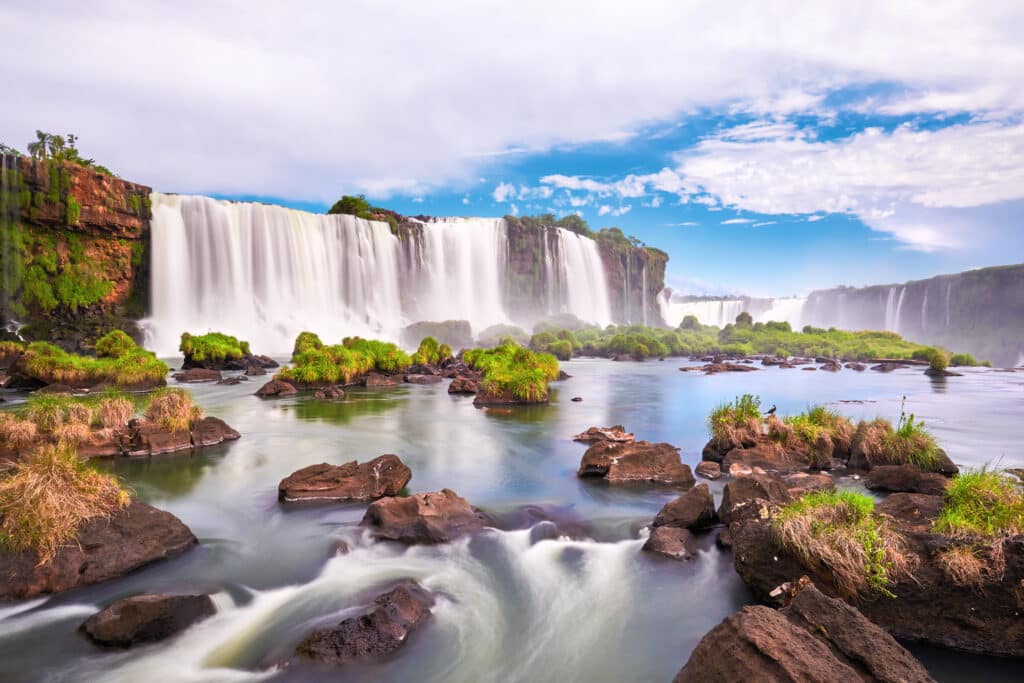
In the north, the Iguazú Falls, a UNESCO World Heritage site, are the world’s largest waterfall system by volume — 275 falls arranged in a 2.7 km-wide semicircle, plunging into the Garganta del Diablo from a height of 82 meters, in the heart of a rainforest inhabited by toucans, coatis and giant butterflies. In the south, Patagonia is one of the last great wildernesses on the planet — the Perito Moreno Glacier, whose 5 km-wide ice front advances 2 meters a day before collapsing with a thunderous roar, is one of the most impressive natural spectacles in the world. To the west, Mendoza and its Andean Malbec vineyards, irrigated by Andean snowmelt, produce some of the best red wines in the world. In the northwest, the Quebrada de Humahuaca (UNESCO) and its mountains in 14 shades of red and gold complete a picture that is anything but ordinary.
Voyages Flammang supports you in designing a tailor-made tour of Argentina, from the great classic Buenos Aires–Iguazú–Patagonia to extensions to Mendoza, Salta and the Quebrada de Humahuaca, fully personalized from Luxembourg.
Why go to Argentina?
Tango and gastronomy in Buenos Aires, the roar of Iguazú’s 275 falls (UNESCO), the ice front of Perito Moreno in Patagonia, Malbec beneath the Andes in Mendoza, and Salta’s colorful cerros colorados: Argentina is a destination of exceptional scale and richness, within flying distance from Luxembourg.
Discover our best tour deals in Argentina
Ready to experience Argentina — tango, glaciers, Iguazú and Malbec?
We have selected for you our most popular tours and stays in Argentina, designed to reveal the very best of this vast country: the great classic Buenos Aires–Iguazú–Patagonia, the Mendoza and Wine Route extension, the Northwest tour (Salta, Quebrada de Humahuaca), or the Argentina–Chile combo featuring Torres del Paine.
Whether you dream of a three-week grand tour from North to South, a couple’s trip between Buenos Aires and Patagonia, a wine tourism getaway in Mendoza, or an Argentina–Brazil combo with Iguazú Falls on both sides, each itinerary is fully customized to your pace and your budget.
Choose your package and we’ll create for you a tailor-made tour in Argentina, turnkey from Luxembourg.
€7,175
price per person
Argentinian Impressions Tour
- Buenos Aires – El Calafate – Perito Moreno – Ushuaia – Iguazu – Jujuy – Huacalera – Humahuaca – Purmamarca – Salta – La Pampa – Buenos Aires
- French-speaking group tour
- Guaranteed departure from 2 people (max 18)
€1,051
price per person
South America Cruise
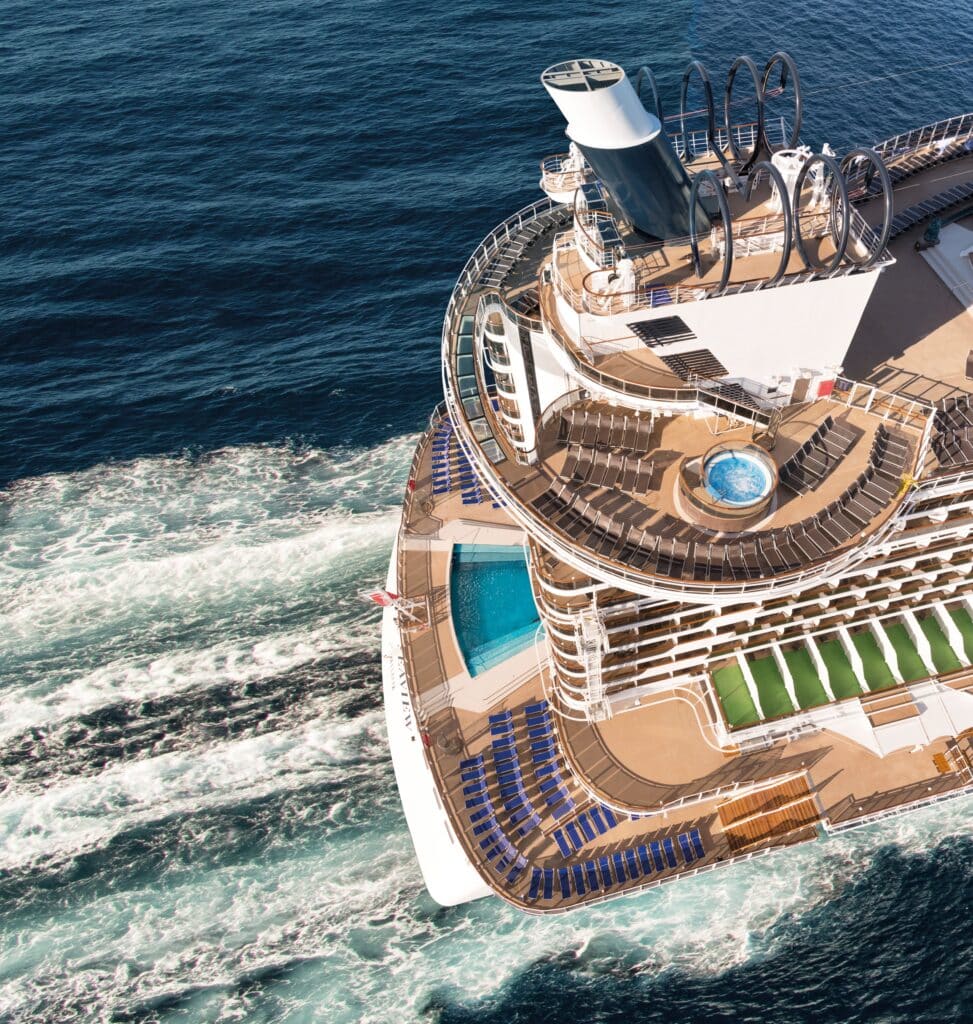
- 8-night cruise departing from and returning to Santos (São Paulo)
- Port calls in Camboriú, Punta del Este, Montevideo and Buenos Aires
- 3 days at sea
€5,275
price per person
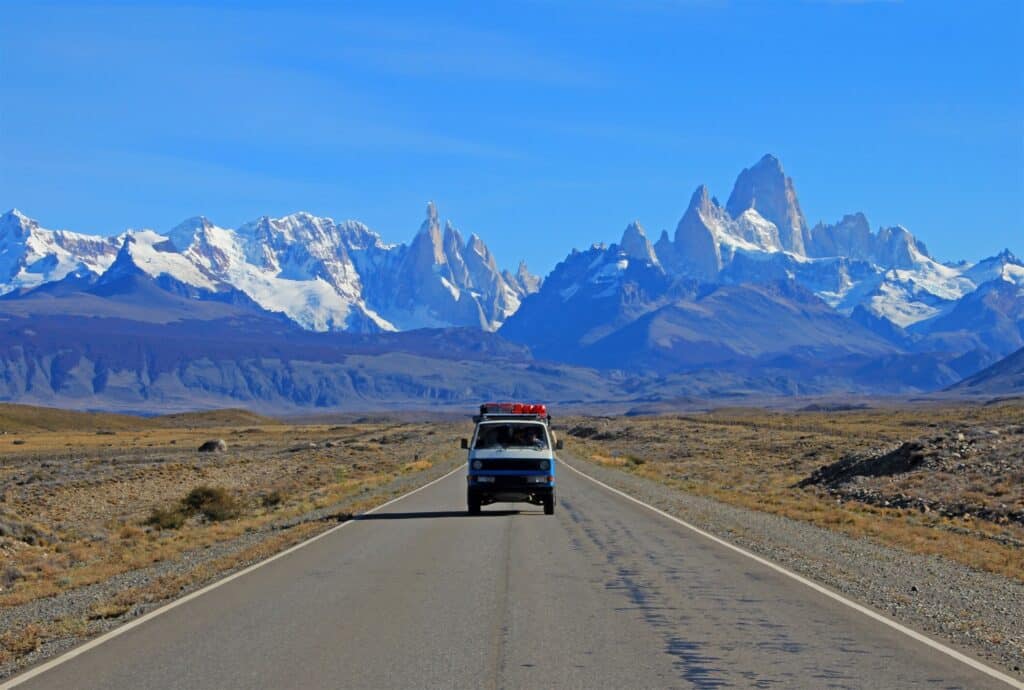
Road trip on Route 40
- A true 16-day road trip on the legendary Ruta 40
- Guaranteed departure every day by hire car from 2 participants
- Crossing Patagonia between lakes, steppes, estancias and glaciers
€8,990
price per person
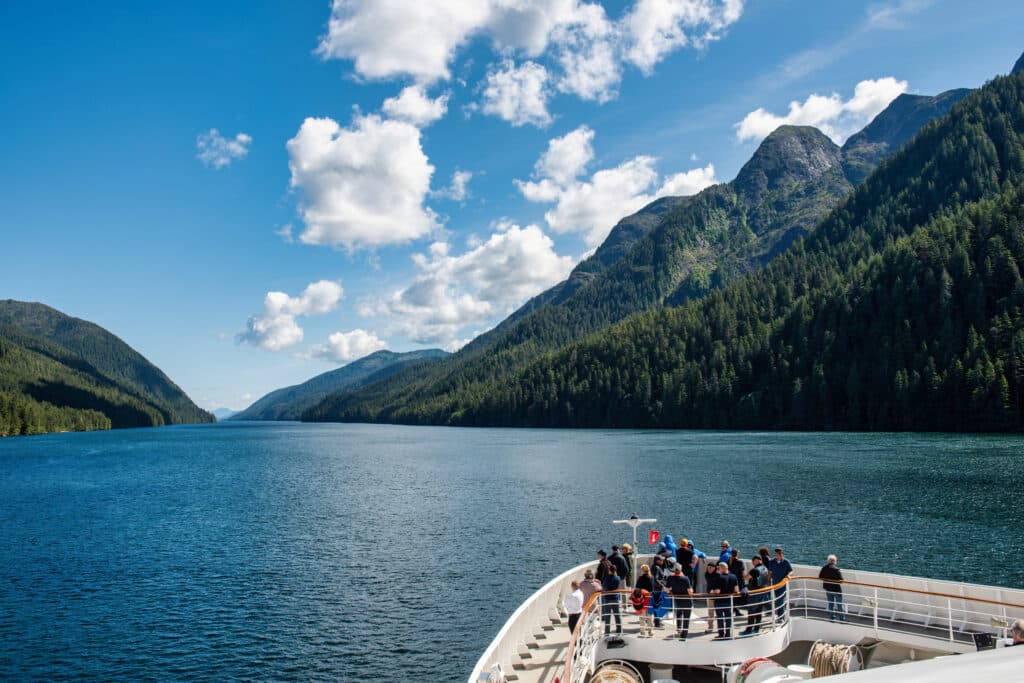
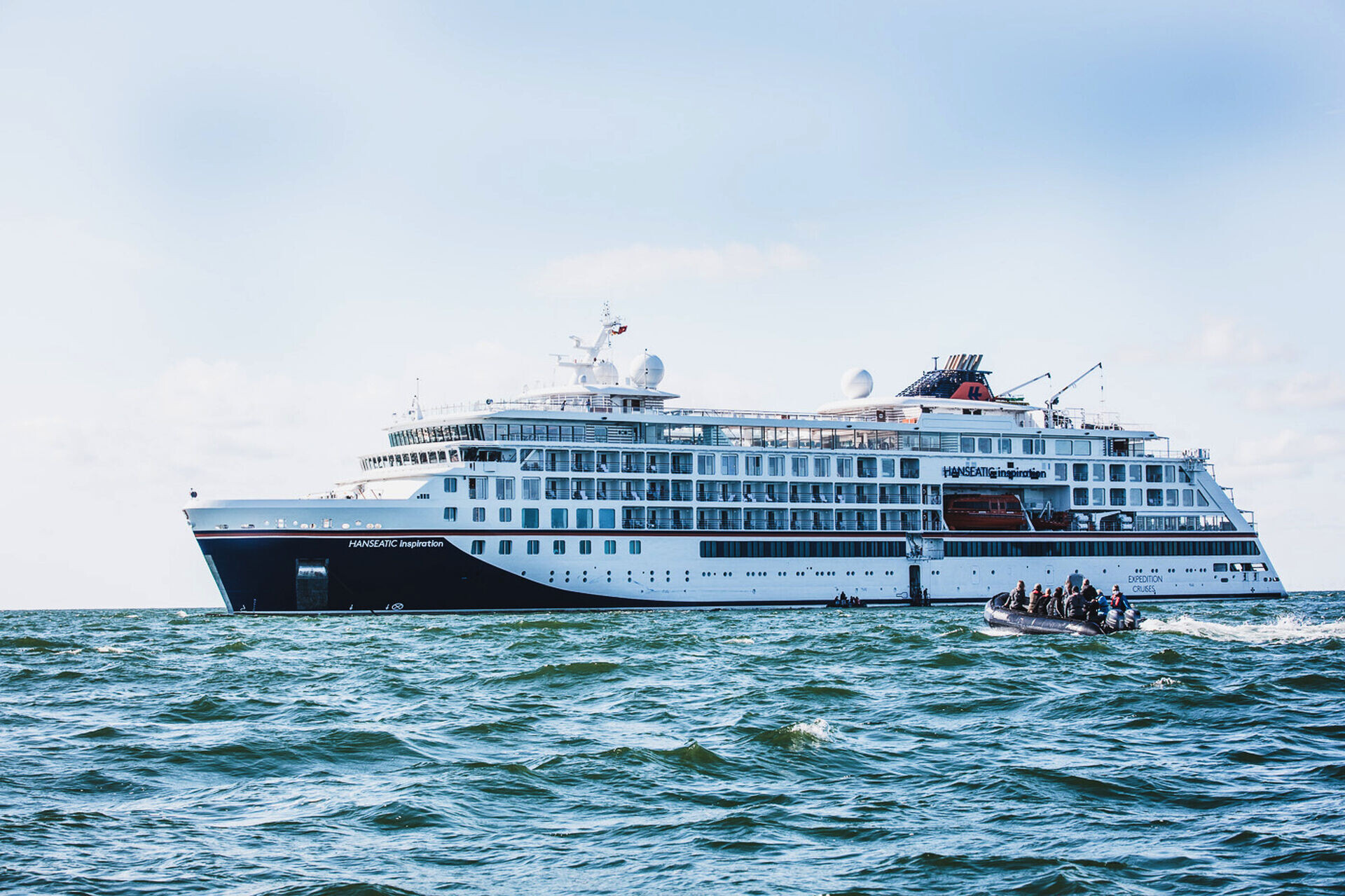
Chilean Fjords Cruise
- Expedition cruise from Ushuaia to Callao / Lima
- Sailing aboard the HANSEATIC inspiration
- Discovering the fjords of southern and northern Chile
Nos voyages organisés – ULT
13795€
price per person
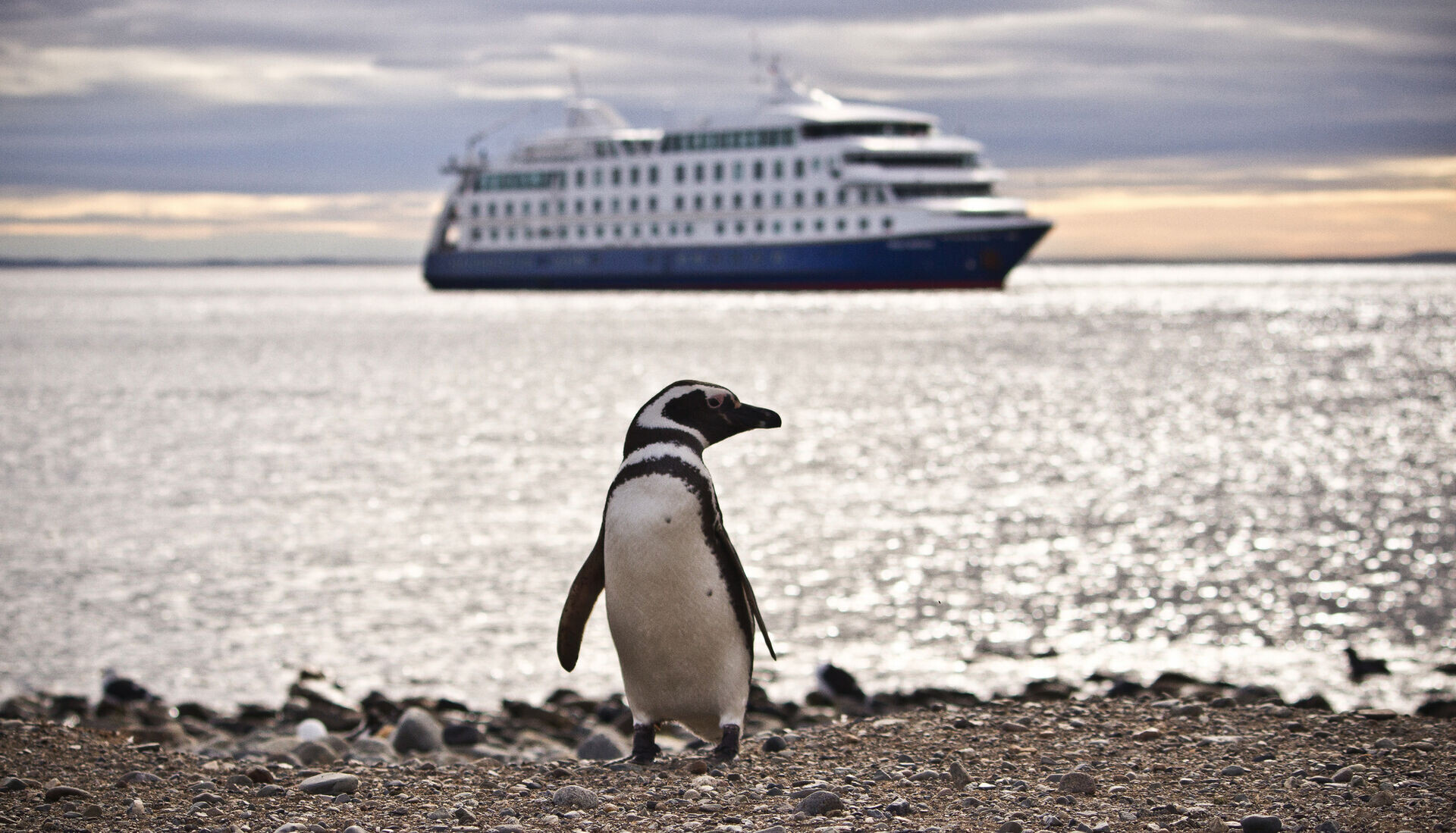
Patagonien: Best of Chile & Argentinien
- Expeditionskreuzfahrt Patagonien
- Atacama Wüste
- Torres del Paine Nationalpark
17260€
price per person
Expedition Antarktis
- Tierparadies Antarktis & Südgeorgien
- Expedition mitten ins ewige Eis
- Auf den Spuren großer Polarforscher
4595€
price per person
Argentinien & Brasilien
- Iguazú-Wasserfälle
- Buenos Aires & authentischer Tango
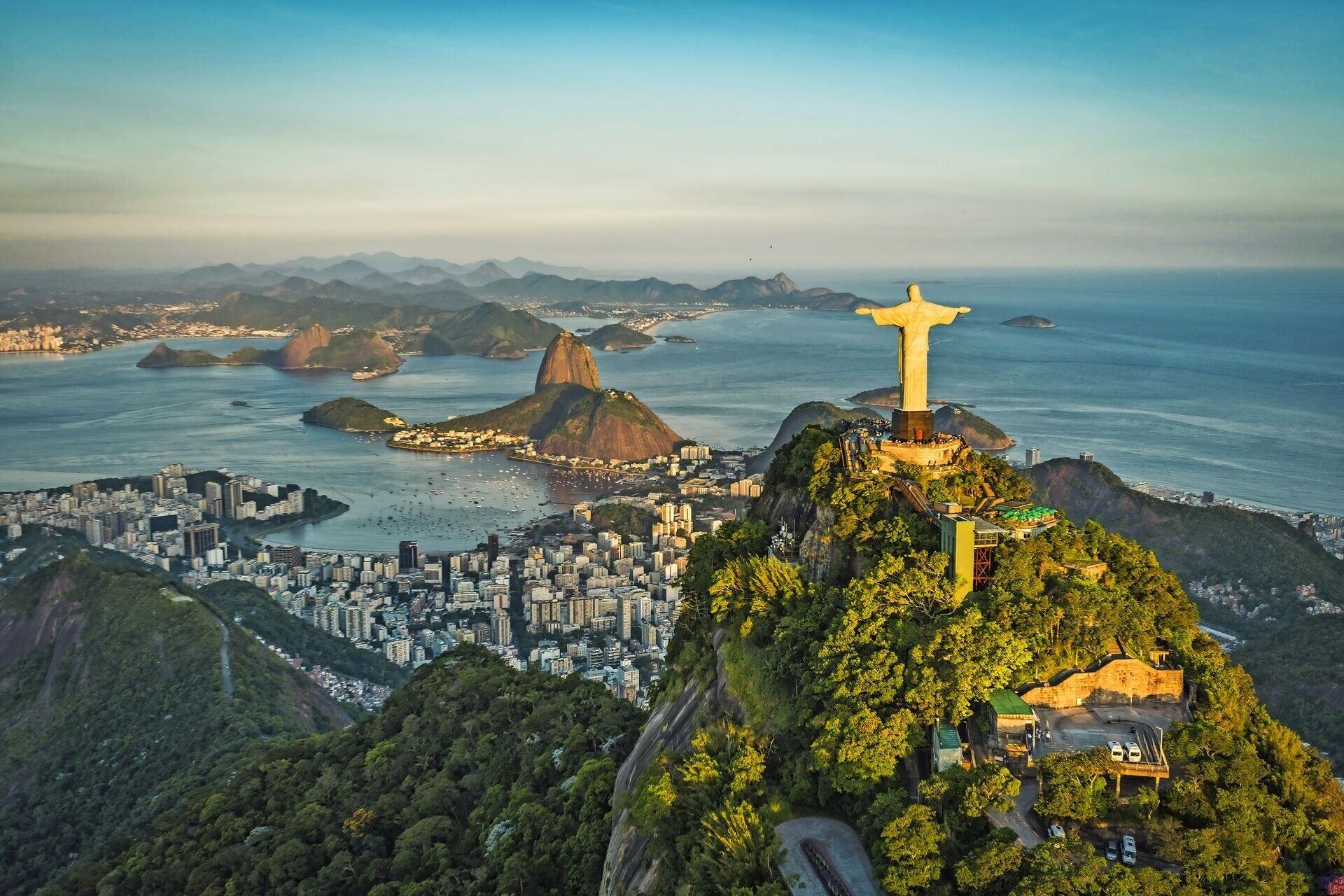
- Rio mit Christusstatue & Zuckerhut
When to go to Argentina?
Argentina is in the Southern Hemisphere—its seasons are exactly the reverse of ours. That makes it an ideal destination for long weekends over Christmas and New Year’s, or for European winter holidays, which coincide with the Argentine austral summer.
November to March – Austral summer: ideal for Buenos Aires, Patagonia and Iguazú
This is peak season in Argentina. Buenos Aires is lively and sunny (28–32°C). Patagonia and the national parks (Los Glaciares, Torres del Paine, El Chaltén) are only accessible in the best conditions from November to March—outside this period, hikes and access are very limited due to extreme weather conditions. Iguazú Falls are spectacular year-round, but the flow is at its highest in February–March (rainy season). December–January is the absolute peak tourist season—book very early.
April–May and September–October – The ideal shoulder seasons for Buenos Aires and Mendoza
These periods offer pleasant weather in Buenos Aires (18–25°C), Mendoza’s vineyards in full swing (the harvest takes place in March–April), and lower prices than in peak season. October is particularly beautiful—the austral spring blooms in Buenos Aires’ parks and purple jacaranda trees fill the capital’s streets.
June to August – Austral winter: avoid Patagonia, enjoy the Northwest
Argentina’s winter (June–August) is cool in Buenos Aires (10–15°C) and Patagonia is almost closed to tourists. On the other hand, the Northwest (Salta, Quebrada de Humahuaca) is ideal in austral winter: mild temperatures (15–25°C), exceptionally clear skies and sites deserted by tourists.
Buenos Aires / Argentina
| Jan | Feb | March | April | Mai | June | July | Aug | Sept | Oct | Nov | Dec | |
|---|---|---|---|---|---|---|---|---|---|---|---|---|
| Our opinion | ||||||||||||
| Season | ||||||||||||
| Tourist peak | ||||||||||||
| T° max | 31°C | 30°C | 28°C | 23°C | 18°C | 14°C | 14°C | 16°C | 18°C | 23°C | 26°C | 29°C |
| Rainy days | 8 d | 7 d | 9 d | 9 d | 8 d | 7 d | 6 d | 7 d | 8 d | 10 d | 9 d | 9 d |
| Hiking |
Where to go in Argentina? Must-see regions and sites
Buenos Aires – La Boca, Palermo, tango and gastronomy
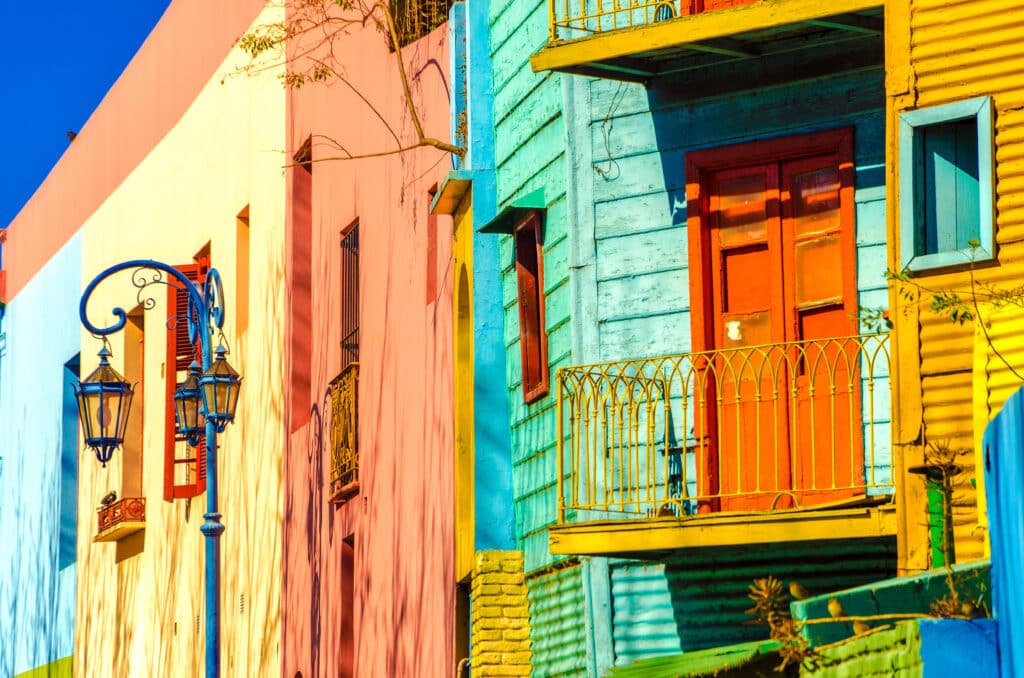
Buenos Aires is a city unlike any other in South America. Its broad Haussmann-inspired boulevards, its eclectic architecture blending Art Deco, neoclassical and modernist styles, and its neighborhoods with strong identities—La Boca and its conventillos (workers’ houses made of corrugated sheet metal painted in bright colors, the birthplace of tango), San Telmo and its Sunday antiques markets, Recoleta and its monumental cemetery (Eva Perón’s tomb), Palermo and its nightlife, trendy restaurants and parks—create a metropolis with incomparable cultural and gastronomic richness. No visitor leaves without having danced (or watched dancing) tango in a porteño milonga.
Don’t miss:
- tango show or milonga in San Telmo (show + dinner)
- the colorful La Boca neighborhood and Caminito
- San Telmo’s Sunday antiques market
Iguazú Falls – the ultimate natural spectacle (UNESCO)
The Iguazú Falls, on the border between Brazil and Argentina, defy comparison: Eleanor Roosevelt, during her visit, is said to have murmured “Poor Niagara!”. It is the world’s largest waterfall system by width—275 cascades in a 2.7 km semicircle, plunging into the Garganta del Diablo from a height of 82 meters, with a flow 14 times greater than Niagara Falls. The Argentinian side is the most spectacular—its walkways along the water’s edge let you find yourself literally in the spray of the falls, just a few meters from the drop. A true baptism. The surrounding rainforest is home to toucans, hummingbirds, macaws, coatis and caimans.
Don’t miss:
- the Garganta del Diablo walkway (Argentinian side) — unforgettable
- the Circuito Superior and Inferior walk (panoramas)
- a visit to the Brazilian side for the sweeping view of the arc of falls
Patagonia – Perito Moreno, El Chaltén & Torres del Paine
Patagonia is one of the last great wildernesses on the planet, shared between Argentina and Chile. On the Argentine side, Los Glaciares National Park (UNESCO) is home to the Perito Moreno Glacier—one of the rare glaciers on Earth that is still advancing, whose 5 km-wide ice front periodically collapses into Lake Argentino with a spectacular thunderous roar. El Chaltén, Argentina’s trekking capital, provides access to the Cerro Torre and Fitz Roy (3,375 m) massifs, whose jagged silhouettes piercing the clouds are among the most photographed in the Southern Andes. The Valdés Peninsula (UNESCO) is home to southern right whales, elephant seals and penguins.
Don’t miss:
- Perito Moreno’s glacier front — view from the walkways
- Laguna de Los Tres (Fitz Roy) trek from El Chaltén
- southern right whale watching in Valdés (Jun–Nov)
Mendoza & the Wine Route – Malbec beneath the Andes
Mendoza, 1,000 km west of Buenos Aires at the foot of the Andes, is the world capital of Malbec. More than 1,200 bodegas (wineries) dot the region, producing some of the best red wines in the world — the vines, irrigated by Andes snowmelt at altitudes of 700 to 1,500 metres, enjoy exceptional sunshine and cool nights that develop tannins of remarkable complexity. Malbec, Torrontés and Cabernet Sauvignon tastings in bodegas that are often architecturally striking (Zuccardi, Achaval Ferrer, Catena Zapata), with the snow-capped silhouette of the Andes as a backdrop, are a memorable experience. Aconcagua (6,961 m — the highest peak in the Americas) is visible on clear days from Mendoza.
Not to be missed:
- Malbec tasting in the great bodegas of the Uco Valley
- Aconcagua excursion — views of the Roof of the Americas
- rafting on the río Mendoza (October–March)
Salta & Quebrada de Humahuaca – the colourful Northwest (UNESCO)
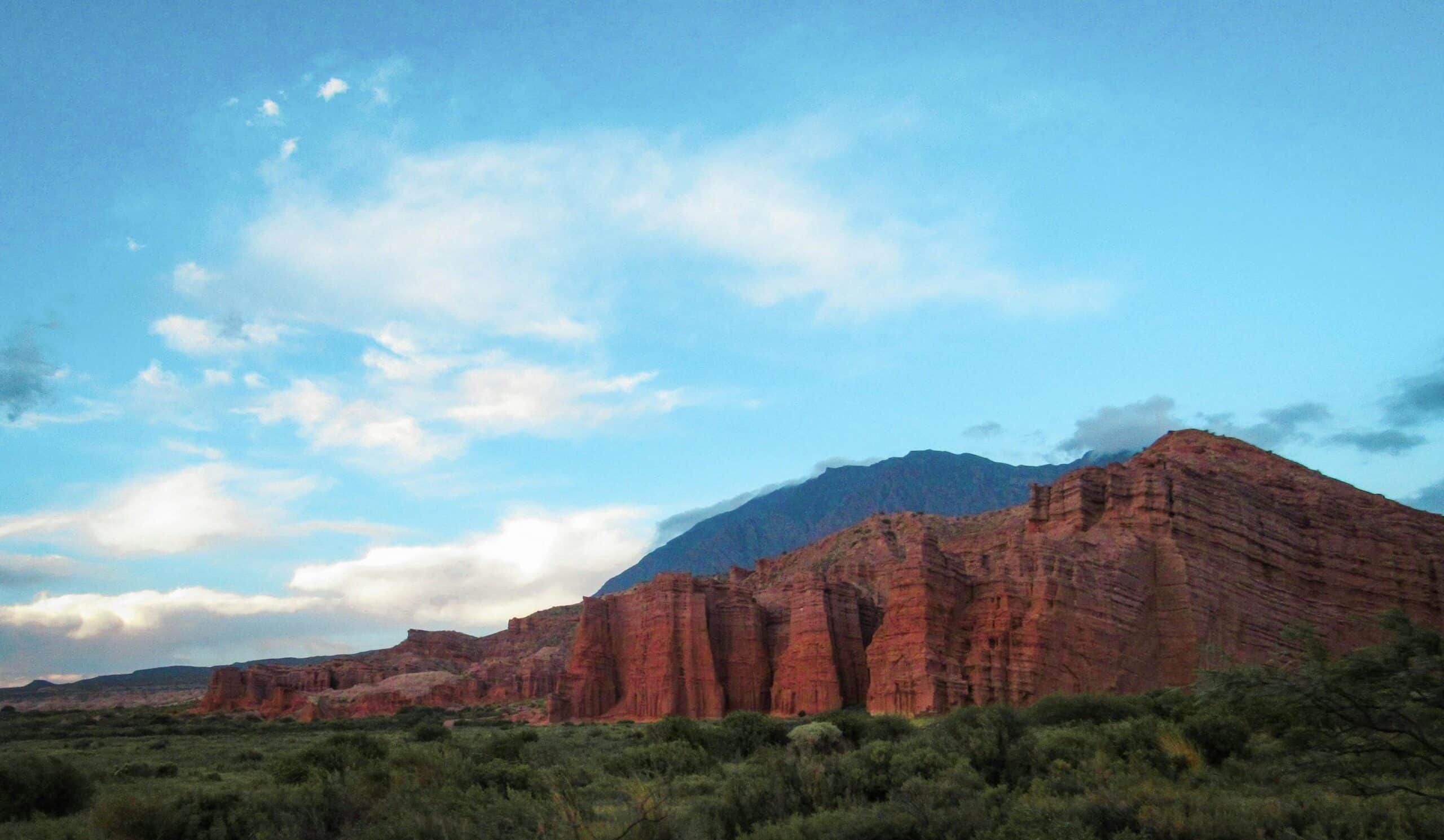
Salta la Linda (“the Beautiful”), a colonial city founded in 1582 in an Andean valley at 1,187 metres above sea level, is the ideal starting point for discovering Argentina’s northwest. The UNESCO-listed Quebrada de Humahuaca is a 155 km valley with rock walls adorned with 14 different hues — ochre, red, purple, pink, yellow and gold — shaped by millions of years of erosion and mineral deposits. The Cerro de los Siete Colores in Purmamarca and the geological formations of Serrania de Hornocal (14 colours in an amphitheatre) are among the most spectacular geological panoramas in the world. Andean villages, artisan markets (textiles, pottery, folk music) and regional cuisine (empanadas jujeñas, humitas, locro) round out this unique Andean cultural immersion.
Not to be missed:
- Cerro de los Siete Colores in Purmamarca at sunrise
- Serrania de Hornocal — the 14 colours in an amphitheatre
- Tilcara craft market and the Pucará ruins
Which trip to Argentina is right for you?
A grand family discovery tour from Buenos Aires to Patagonia, a romantic couples’ getaway between the vineyards of Mendoza and the far-southern glaciers, or an intense adventure with friends on Patagonia’s peaks — Argentina offers a range of unique experiences for every travel style.

Family trip – Iguazú, penguins and Argentina’s wide-open spaces
Argentina is a fantastic destination for families. The Iguazú Falls — standing on the walkway facing the Garganta del Diablo and getting spray full in your face — creates unforgettable emotions for children. The penguins of Punta Tombo (Valdés Peninsula, the largest continental colony in the world), elephant seals and southern right whales offer incomparable nature experiences. The modernity and safety of Buenos Aires, with its parks, interactive museums and family-friendly restaurants, make travelling with children easier.
You will particularly enjoy:
- Garganta del Diablo walkway in Iguazú — guaranteed thrills
- penguins and elephant seals on the Valdés Peninsula
- family Argentine asado in a pampa estancia

Couples trip – tango in Buenos Aires & vineyards in Mendoza
Argentina is a deeply romantic destination. A tango lesson for two at an academy in San Telmo, a candlelit dinner in a Puerto Madero restaurant overlooking the Río de la Plata, a night in a charming boutique hotel in Palermo, a Malbec tasting day in the Mendoza vineyards with the Andes as a backdrop at sunset, a sunrise facing the Perito Moreno Glacier in the absolute silence of southern Patagonia — experiencing Argentina as a couple is a journey of intensity and elegance.
To enjoy as a duo:
- private tango lesson in San Telmo + milonga in the evening
- Malbec tasting at a Valle de Uco bodega with Andes views
- sunrise facing Perito Moreno in Patagonia

Trip with friends – trekking in Patagonia & football in Buenos Aires
With friends, Argentina offers an exceptional programme of adventure and togetherness: multi-day trekking on the trails of Fitz Roy and Cerro Torre in El Chaltén (among the most beautiful in the world), attending a football match at Boca Juniors’ La Bombonera stadium (the most intense sporting and popular experience in South America), a giant asado in a pampa estancia with a gaucho, 4×4 raids in the Quebrada de Humahuaca, evenings in the bars of Palermo in Buenos Aires — experiencing Argentina in a group is a non-stop adventure.
Not to be missed:
- Laguna de Los Tres trek (Fitz Roy) from El Chaltén
- Boca Juniors match at La Bombonera — the Argentine atmosphere
- asado and rodeo with the gauchos in a pampa estancia
Practical tips for your trip to Argentina
Argentina is the country with the highest number of psychoanalysts per capita in the world — Buenos Aires alone has more than 40,000 therapists for 15 million inhabitants, an absolute record. The country also has the highest number of Nobel Prize winners in Latin America, an exceptionally rich literary culture (Jorge Luis Borges, Julio Cortázar) and the parilla (beef grill) as a national religion — an Argentine consumes an average of 55 kg of beef per year.
No visa is required for Luxembourgish nationals. Entry is permitted for up to 90 days, renewable for an additional 90 days. The passport must be valid for the entire duration of the stay. Since 2022, a Tasa Reciprocidad (reciprocity fee) has been abolished — entry is therefore completely free. Tip: bring a photocopy of your passport for hotels and purchases.
The official currency is the Argentine peso (ARS). Due to the peso’s historical fluctuations and inflation, USD are widely accepted in hotels, travel agencies and tourist restaurants. There are several exchange rates — the official rate and the “blue” rate (a legalised parallel market). Exchange only at official cambios or via your agency. Visa and Mastercard work, but fees can be high. Bring USD cash in small denominations.
Argentina is on UTC-3 all year round (no daylight saving time). In the European winter (November to March, Argentina’s high season), the time difference is 4 hours (it’s noon in Luxembourg when it’s 8 a.m. in Buenos Aires). In the European summer (April to October), the time difference is 5 hours. The jet lag is moderate for a 15–17-hour long-haul flight — most travellers adapt quickly after 1 to 2 days on site.
Argentina is a relatively affordable destination for Europeans. For mid-range travel, budget EUR 80–150 per person per day (4-star hotel accommodation, meals in good restaurants with wine, transport). Flights from Luxembourg cost between EUR 700 and 1,300 (depending on the airline and the season). Domestic flights (Buenos Aires–Iguazú, Buenos Aires–Bariloche, Buenos Aires–El Calafate) are an additional EUR 100–250 per leg. A complete 15-day tour costs EUR 2,500–4,500 per person at mid-range level.
Argentina is generally safe for tourists. Buenos Aires is a major metropolis that requires the usual precautions (pickpockets in tourist areas, handbags, phones). Patagonia, Mendoza and the Northwest are very safe destinations. Check the travel advice from Luxembourg’s Ministry of Foreign Affairs before departure. The economic crisis of recent years has not impacted tourist safety. Take out travel insurance including repatriation.
Create your tailor-made tour in Argentina now
Tango in Buenos Aires, Iguazú Falls, Perito Moreno Glacier, Malbec in Mendoza and the colourful cerros of Salta.
We design for you a tailor-made tour in Argentina, fully adapted to your dates, your pace and your budget.
Also discover our other destinations in South America
Feel like combining Argentina with another South American destination?
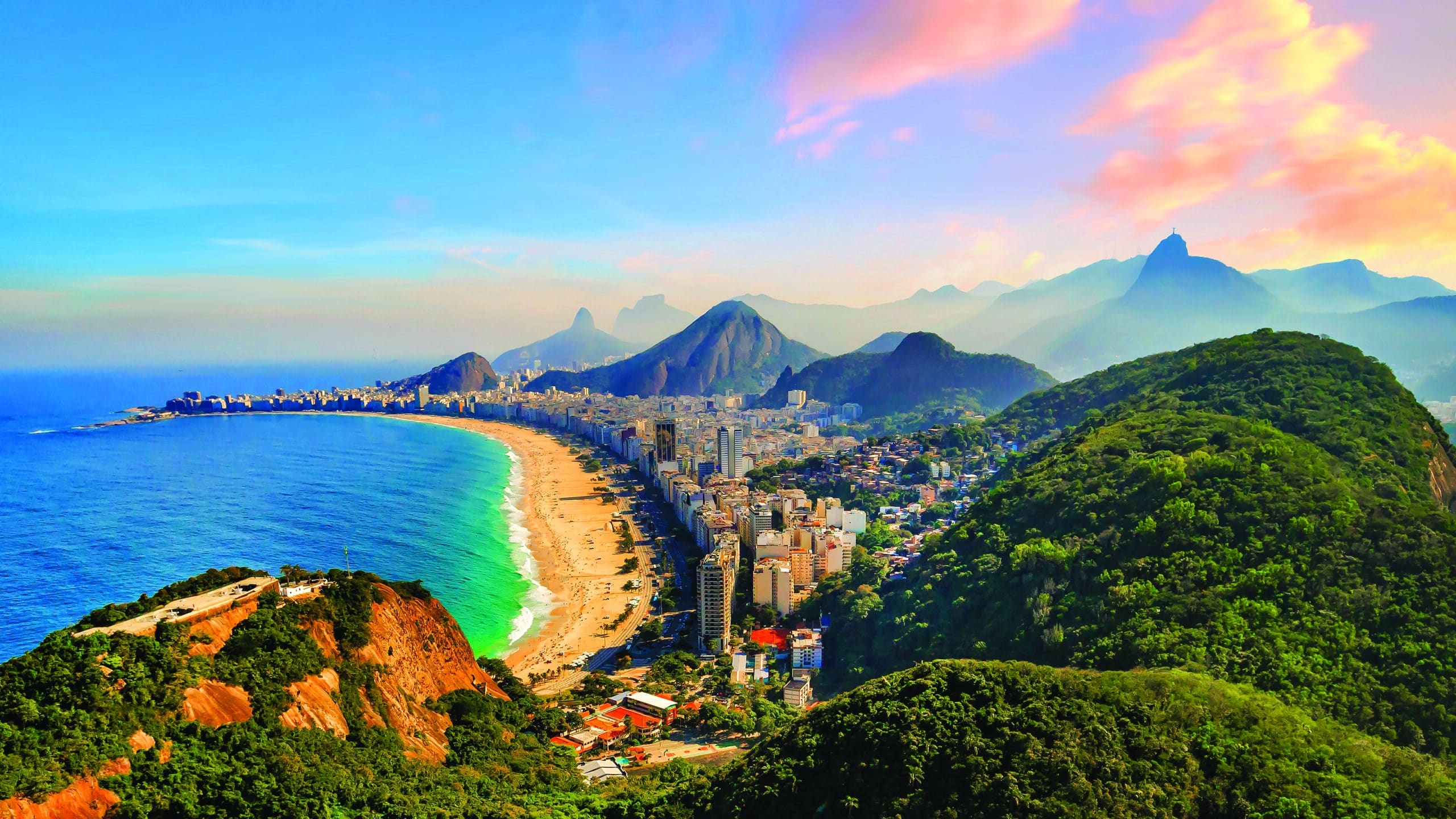
Argentina naturally pairs with Brazil (Iguazú on both sides, Rio de Janeiro), Chile (Torres del Paine, Atacama, Santiago), Bolivia (Salar de Uyuni, Lake Titicaca) or Uruguay (Montevideo, Colonia del Sacramento 1 hour from Buenos Aires by ferry). Our experts design the most coherent itineraries for a grand tour of South America.
Brazil
Between samba, jungle and golden sand
Colombia
Between jungle, coffee and infinite horizons
Peru
Journey to the heart of the Andes and timeless civilisations.
FAQ: everything you need to know before travelling to Argentina
Yes, Argentina is an excellent family destination. Iguazú Falls are guaranteed to be an emotional shock for children (and adults). The Valdés Peninsula (penguins, elephant seals, whales) is perfect for animal-loving kids. Buenos Aires is a modern, safe city with many parks, interactive museums and family-friendly restaurants. Argentine grilled beef at the parilla usually appeals to everyone. Plan a moderate pace — internal distances are huge and require domestic flights.
Argentina is vast — 15 to 21 days is the minimum for a satisfying itinerary covering Buenos Aires, Iguazú and Patagonia. 10 days allows you to see Buenos Aires and either Iguazú or Patagonia, but not both comfortably. For a complete grand tour (Buenos Aires + Iguazú + Mendoza + Salta + Patagonia), plan 21 to 28 days. Adding Chile (Torres del Paine) requires at least 3 additional days in Patagonia.
Both, if possible! The Argentine side is the most immersive — its walkways right by the water let you find yourself in the spray of the falls, just a few metres from the drop. The Garganta del Diablo (Argentine side) is the main waterfall and the most spectacular head-on view. The Brazilian side offers the most panoramic overall view of the full arc of the Argentine falls — ideal for photos. Many travellers spend one day on each side.
Yes, and it’s one of the great South American classics. In Patagonia, the Argentina–Chile border is very easy to cross — Torres del Paine (Chilean side) and El Chaltén / Perito Moreno (Argentine side) can be visited on a combined itinerary from El Calafate. Elsewhere in the country, Mendoza (Argentina) and the Col del Cristo Redentor provide access to Santiago (Chile) in 6–7 hours by road or a 1-hour flight. A 21-day Argentina–Chile combo is one of the itineraries most requested from our advisors.
Absolutely. Buenos Aires is the world capital of tango and offers classes for complete beginners (after just 1 hour, you’ll pick up the basics). Renowned academies such as La Viruta, El Beso or Tango Queer in San Telmo and Palermo offer private or group lessons at very affordable prices (USD 30–80/hour for a private lesson). After 2–3 basic classes, it’s possible to join a supervised milonga (tango night) — an unforgettable cultural experience.
Argentine gastronomy is dominated by parilla-grilled beef — the quality of Argentine meat (raised outdoors on the pampas) is among the best in the world. The 5 must-tries: Asado (whole beef barbecue with chimichurri sauce), Empanadas (pastries filled with meat, cheese, or spinach), Provoleta (provolone cheese grilled on the parilla), Dulce de Leche (milk jam — on everything, really everything), and Malbec from Mendoza, the perfect red wine to go with any parilla.